


23 of 211 products
-

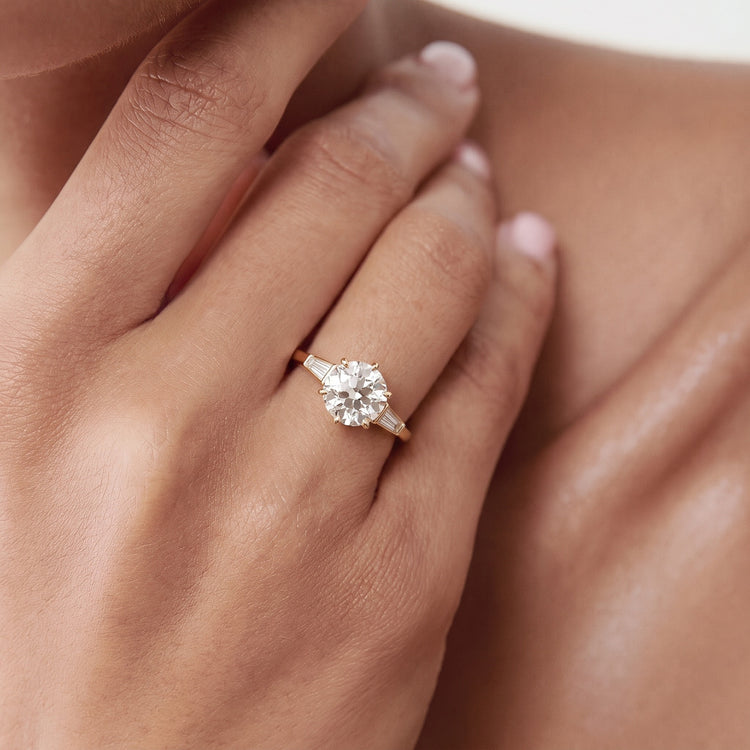
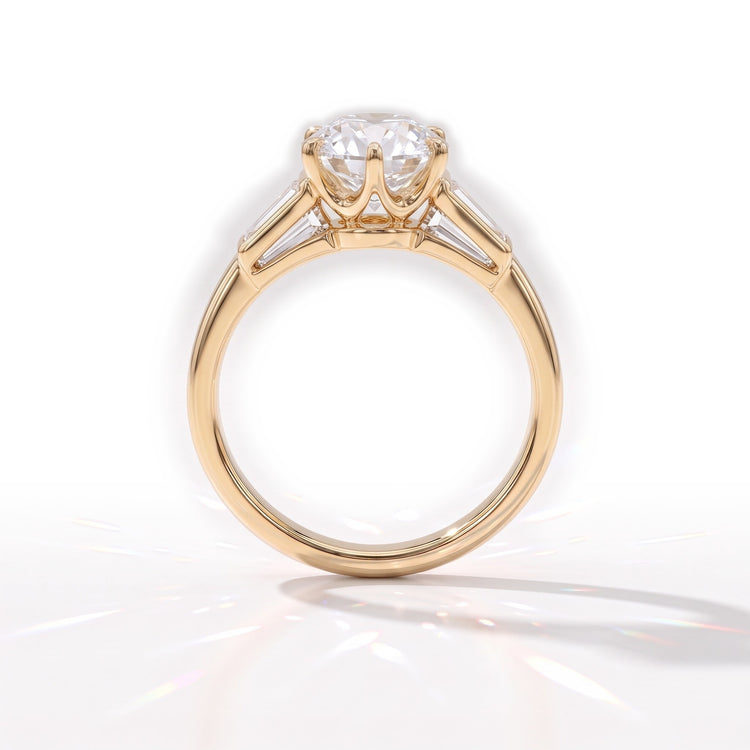
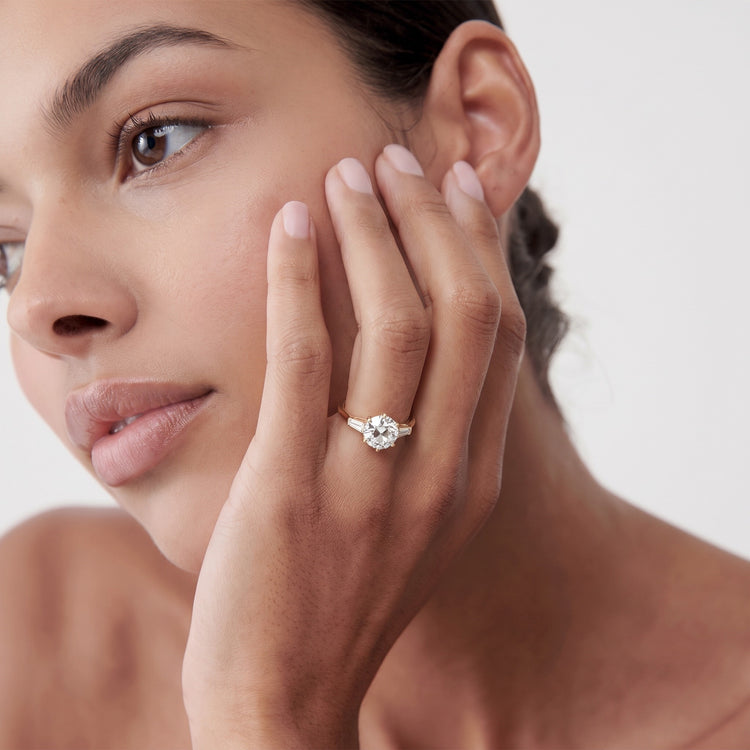
 Liesel Old Mine Round Baguette Three Stone RingLiesel Old Mine Round Baguette Three Stone Ring
- Regular price
-
From
€1.500,00 - Regular price
-
€2.000,00 - Sale price
-
From
€1.500,00
-

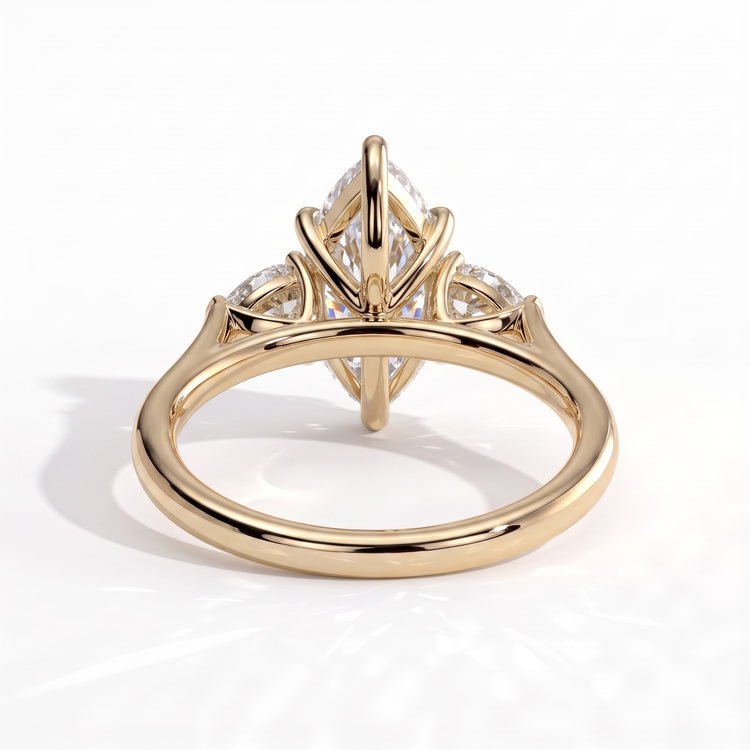
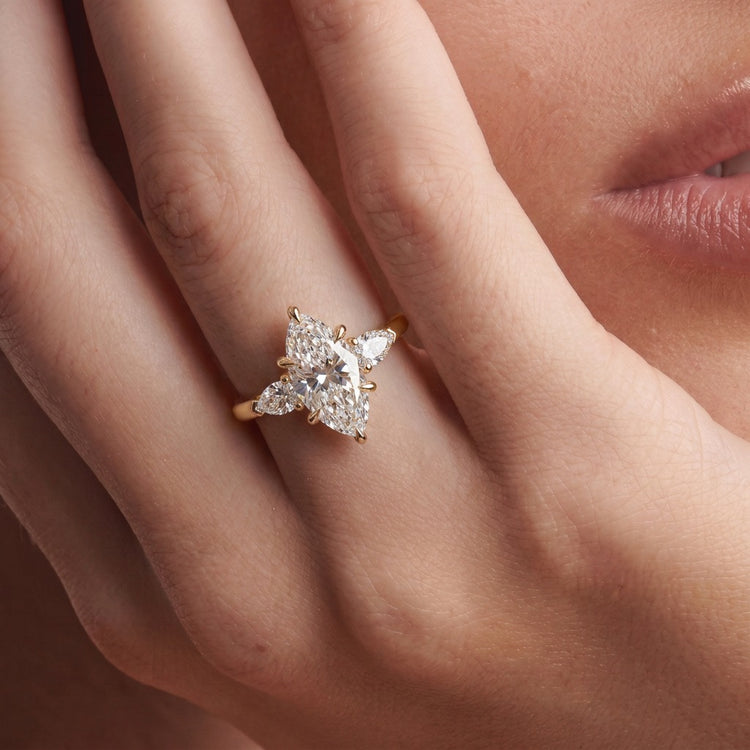
 Eudora Marquise Three Stone RingEudora Marquise Three Stone Ring
- Regular price
-
From
€1.507,50 - Regular price
-
€2.010,00 - Sale price
-
From
€1.507,50
-

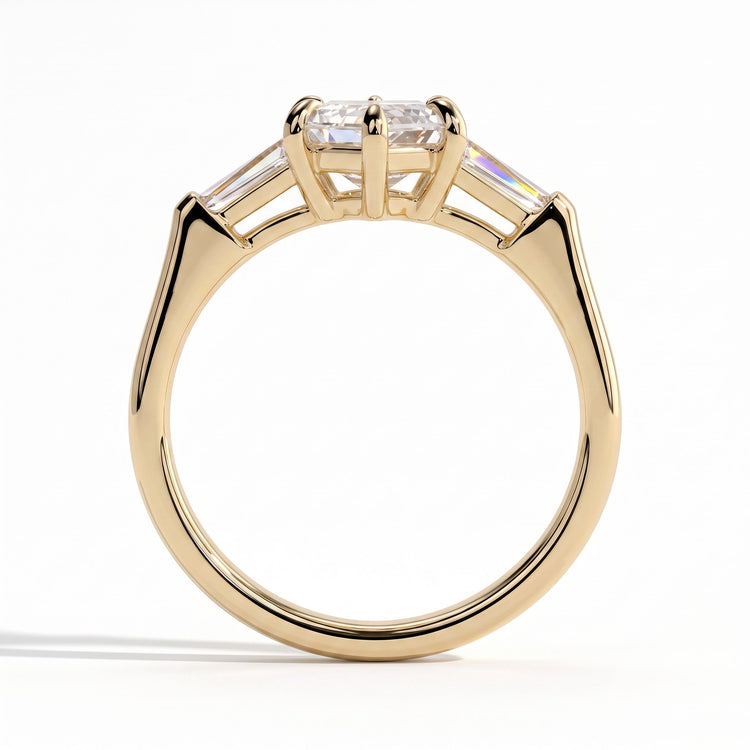
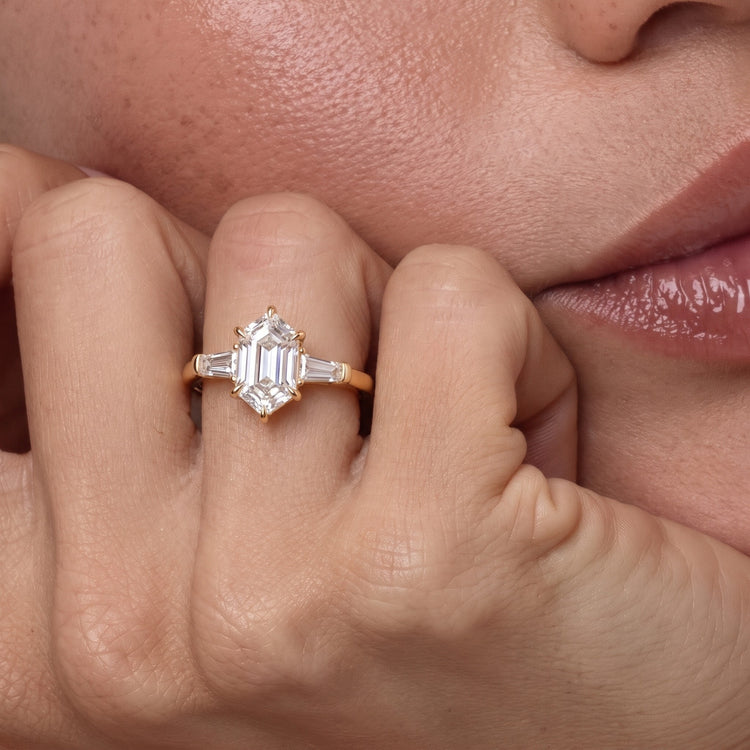
 Wilma Elongated Hexagonal Three Stone RingWilma Elongated Hexagonal Three Stone Ring
- Regular price
-
From
€1.507,50 - Regular price
-
€2.010,00 - Sale price
-
From
€1.507,50
-

 Vivienne Radiant Three Stone RingVivienne Radiant Three Stone Ring
- Regular price
-
From
€1.462,50 - Regular price
-
€1.950,00 - Sale price
-
From
€1.462,50
-

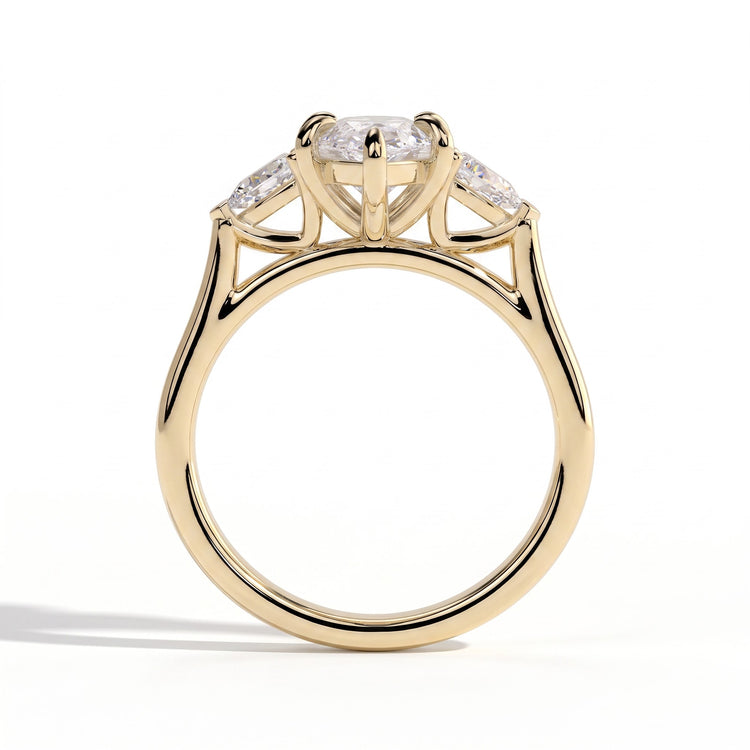
 Selma Pear Three Stone RingSelma Pear Three Stone Ring
- Regular price
-
From
€1.417,50 - Regular price
-
€1.890,00 - Sale price
-
From
€1.417,50
-

 Florence Elongated Cushion Three Stone RingFlorence Elongated Cushion Three Stone Ring
- Regular price
-
From
€1.582,50 - Regular price
-
€2.110,00 - Sale price
-
From
€1.582,50
-
Virtual consultation
Meet Felix, your diamond expert
Talk to FelixChat with Felix on WhatsApp or arrange a personal online consultation. He helps you choose the right diamond, metal and design.
-

 Valentina Elongated Hexagonal Three Stone RingValentina Elongated Hexagonal Three Stone Ring
- Regular price
-
From
€1.567,50 - Regular price
-
€2.090,00 - Sale price
-
From
€1.567,50
-

 Anthea Emerald Three Stone RingAnthea Emerald Three Stone Ring
- Regular price
-
From
€1.447,50 - Regular price
-
€1.930,00 - Sale price
-
From
€1.447,50
-

 Eirene Cushion Three Stone RingEirene Cushion Three Stone Ring
- Regular price
-
From
€1.447,50 - Regular price
-
€1.930,00 - Sale price
-
From
€1.447,50
-

 Ariadne Emerald Three Stone RingAriadne Emerald Three Stone Ring
- Regular price
-
From
€1.537,50 - Regular price
-
€2.050,00 - Sale price
-
From
€1.537,50
-

-

 Femke Dutch Marquise Three Stone RingFemke Dutch Marquise Three Stone Ring
- Regular price
-
From
€1.597,50 - Regular price
-
€2.130,00 - Sale price
-
From
€1.597,50
-

 Ylva Elongated Cushion Three Stone RingYlva Elongated Cushion Three Stone Ring
- Regular price
-
From
€1.620,00 - Regular price
-
€2.160,00 - Sale price
-
From
€1.620,00
-

 Malva Pink Diamond Pear Three-Stone RingMalva Pink Diamond Pear Three-Stone Ring
- Regular price
-
From
€1.695,00 - Regular price
-
€2.260,00 - Sale price
-
From
€1.695,00
-

 Cassia Pear Three Stone RingCassia Pear Three Stone Ring
- Regular price
-
From
€1.552,50 - Regular price
-
€2.070,00 - Sale price
-
From
€1.552,50
-

 Gabrielle Oval Three Stone RingGabrielle Oval Three Stone Ring
- Regular price
-
From
€1.537,50 - Regular price
-
€2.050,00 - Sale price
-
From
€1.537,50
-

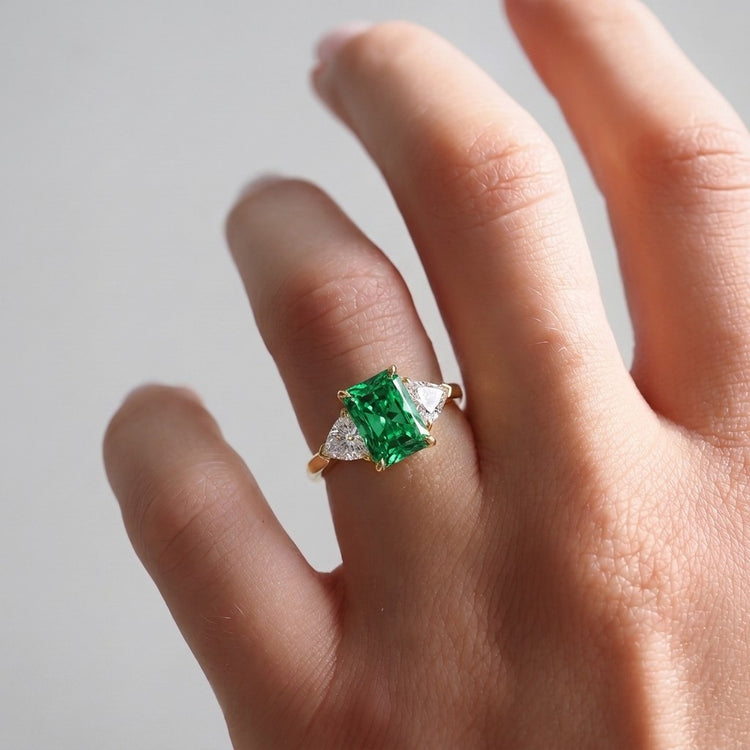
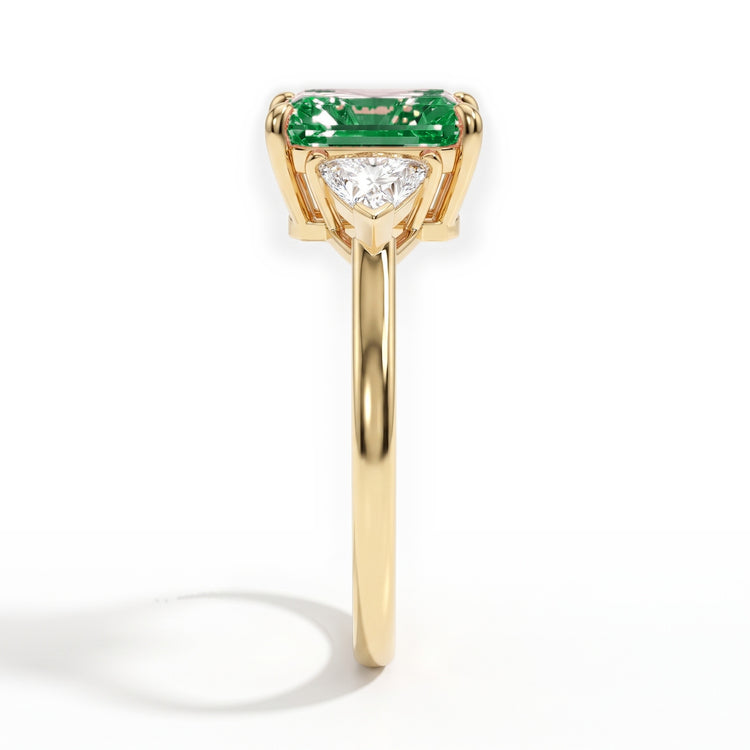
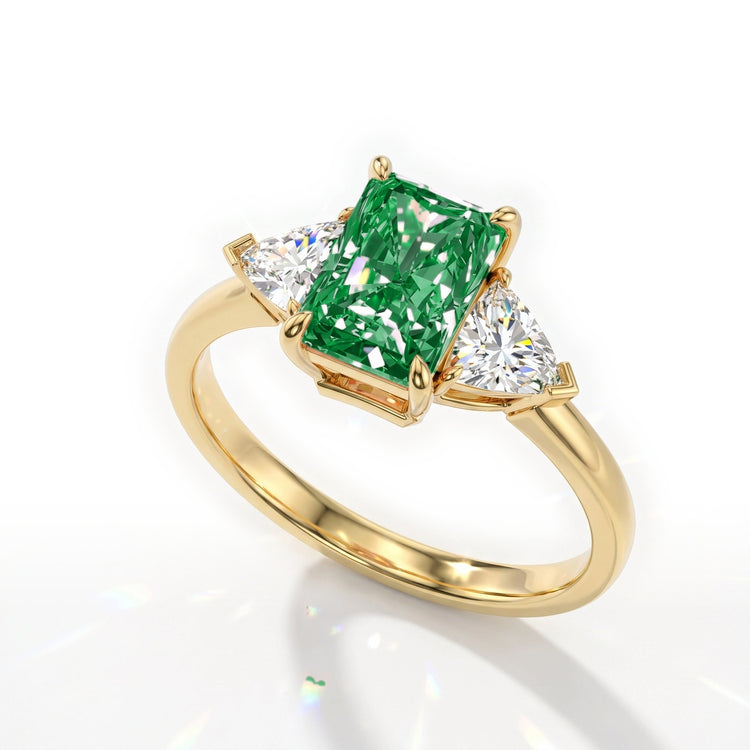
 Elowen Green Diamond Radiant Three-Stone RingElowen Green Diamond Radiant Three-Stone Ring
- Regular price
-
From
€1.860,00 - Regular price
-
€2.480,00 - Sale price
-
From
€1.860,00
-

 Pauline Round Three Stone RingPauline Round Three Stone Ring
- Regular price
-
From
€1.372,50 - Regular price
-
€1.830,00 - Sale price
-
From
€1.372,50
-

-

 Iris Radiant Three Stone RingIris Radiant Three Stone Ring
- Regular price
-
From
€1.545,00 - Regular price
-
€2.060,00 - Sale price
-
From
€1.545,00
-

 Alessia Elongated Cushion Three Stone RingAlessia Elongated Cushion Three Stone Ring
- Regular price
-
From
€1.710,00 - Regular price
-
€2.280,00 - Sale price
-
From
€1.710,00
-

 Marcella Emerald Three Stone RingMarcella Emerald Three Stone Ring
- Regular price
-
From
€1.440,00 - Regular price
-
€1.920,00 - Sale price
-
From
€1.440,00
-

 Isolde Radiant Three Stone RingIsolde Radiant Three Stone Ring
- Regular price
-
From
€1.620,00 - Regular price
-
€2.160,00 - Sale price
-
From
€1.620,00
-

 Salome Yellow Diamond Radiant Three-Stone RingSalome Yellow Diamond Radiant Three-Stone Ring
- Regular price
-
From
€1.860,00 - Regular price
-
€2.480,00 - Sale price
-
From
€1.860,00
-

 Danica Oval Three Stone RingDanica Oval Three Stone Ring
- Regular price
-
From
€1.380,00 - Regular price
-
€1.840,00 - Sale price
-
From
€1.380,00





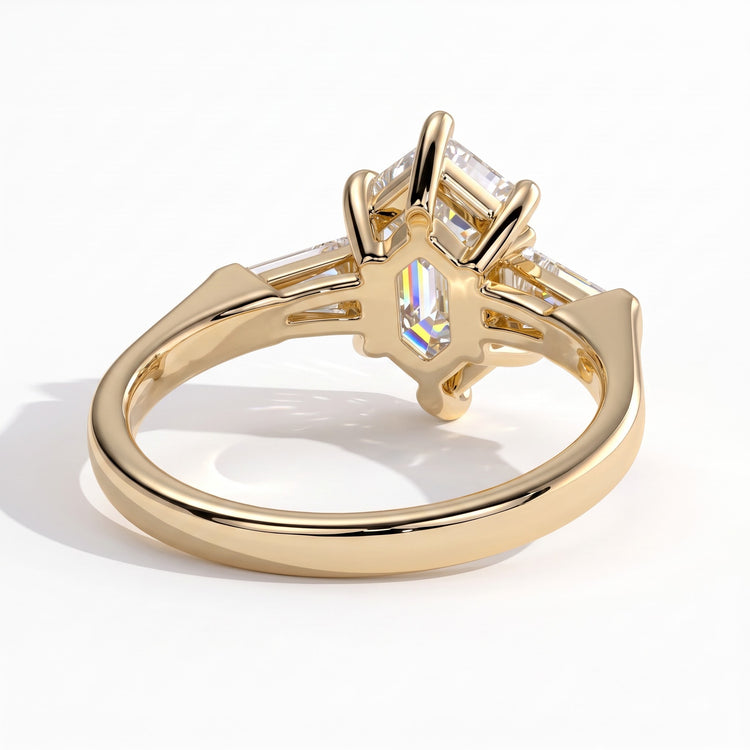


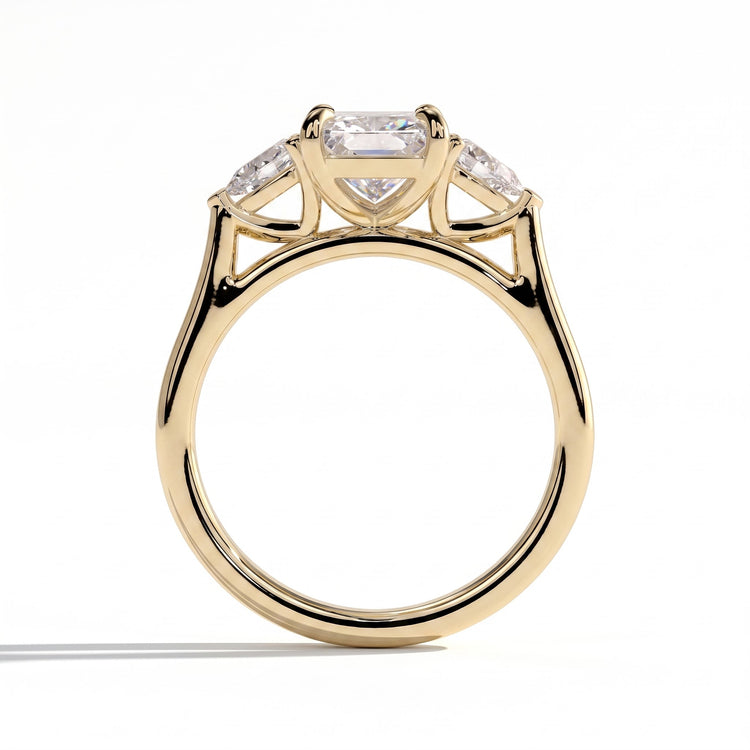
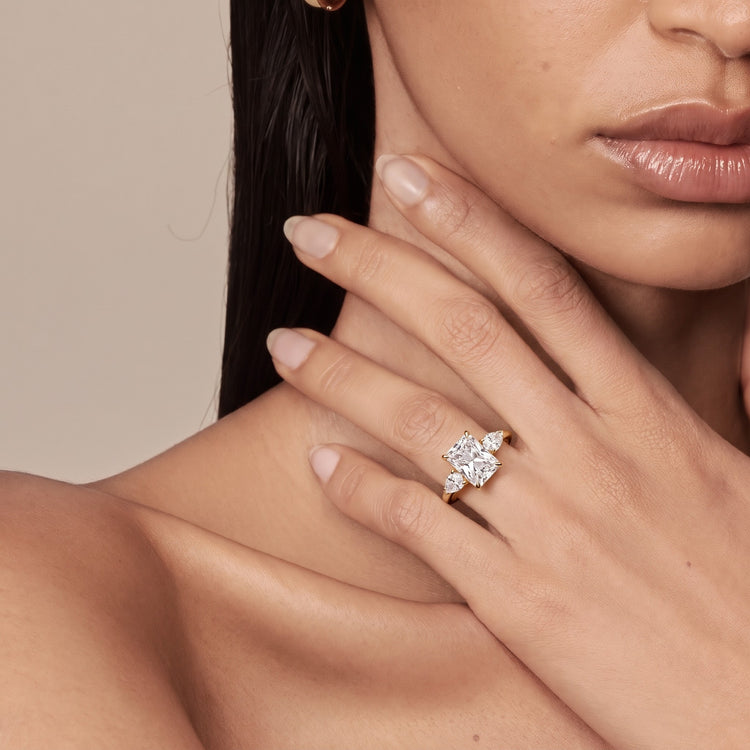
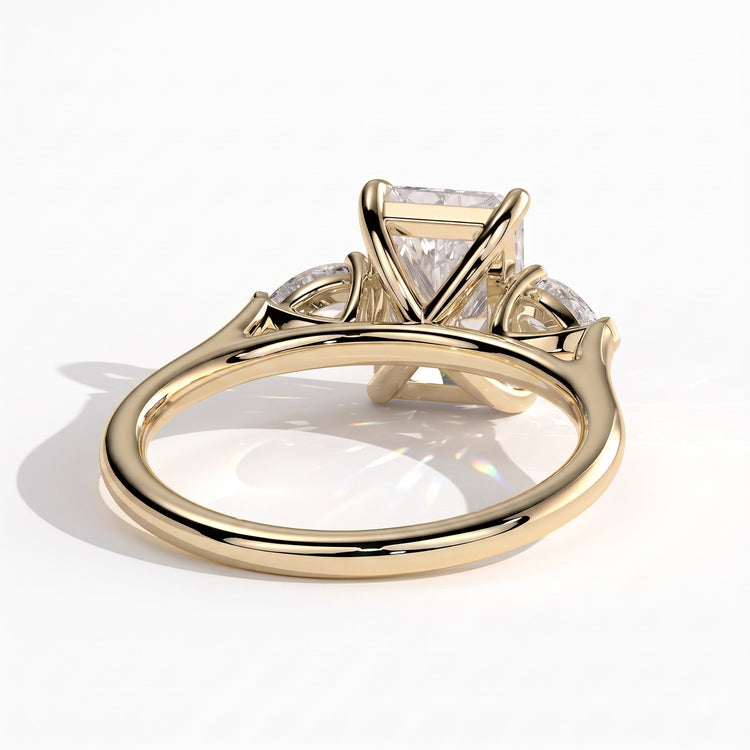
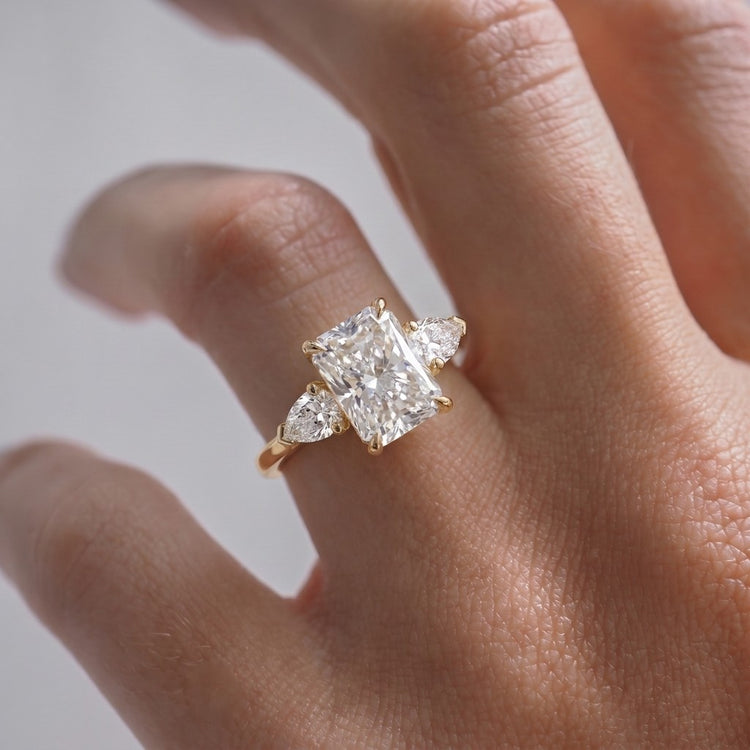


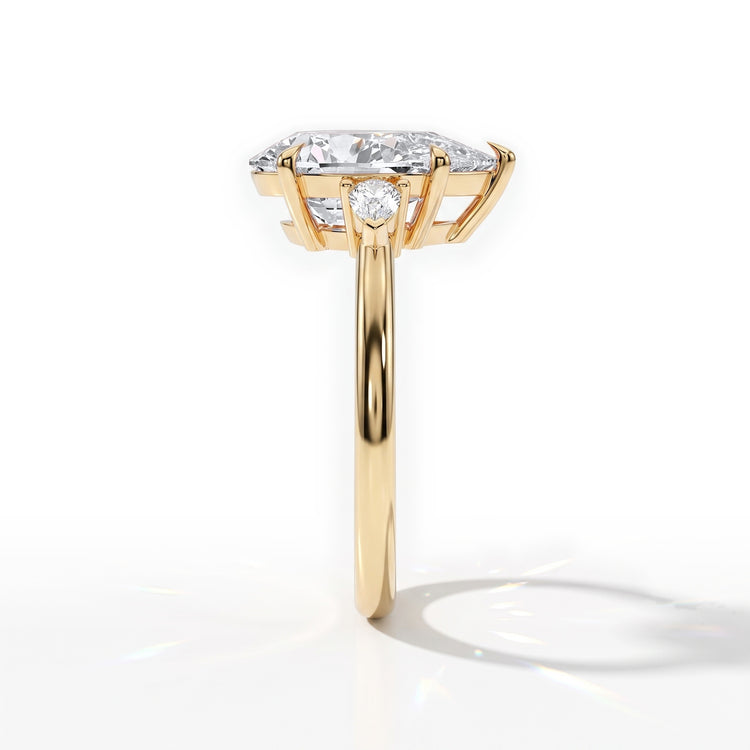
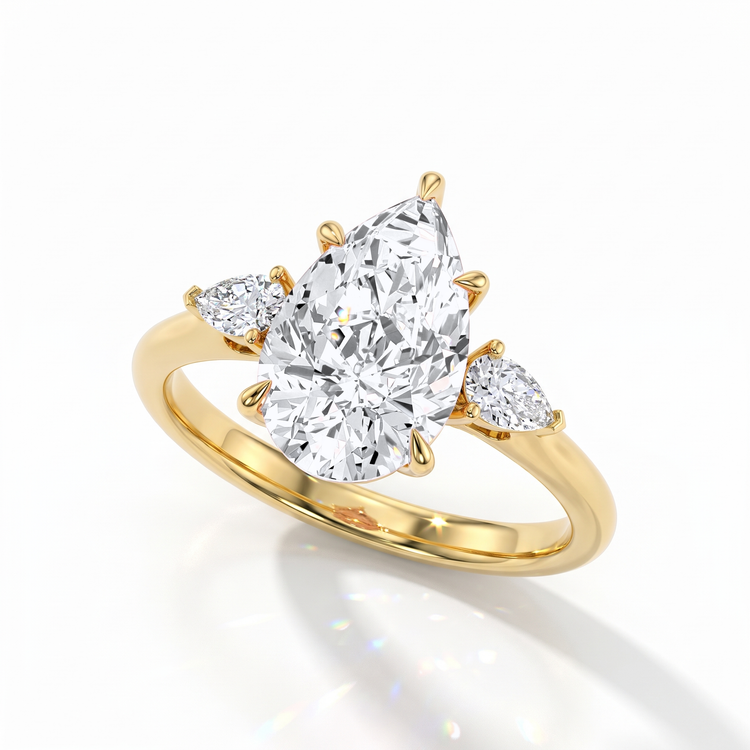


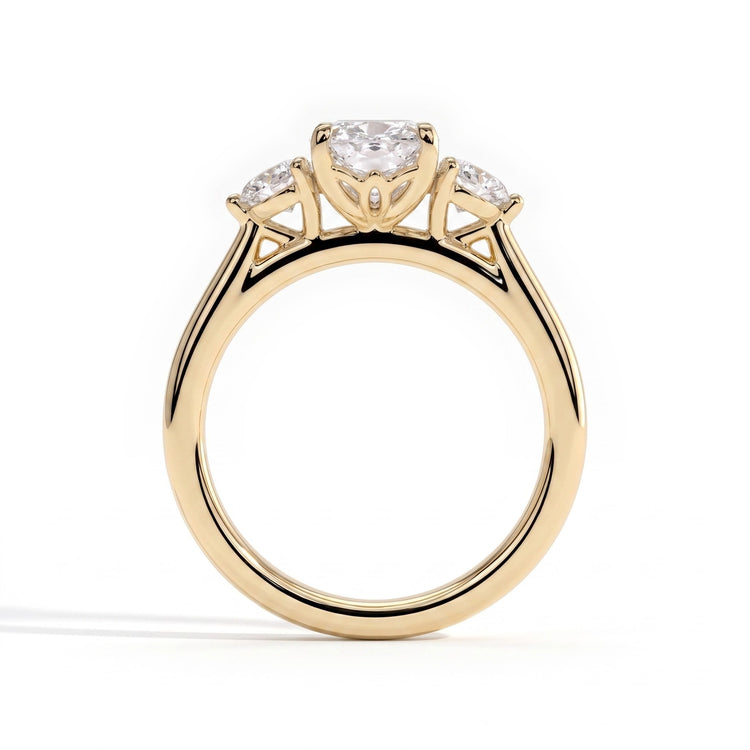
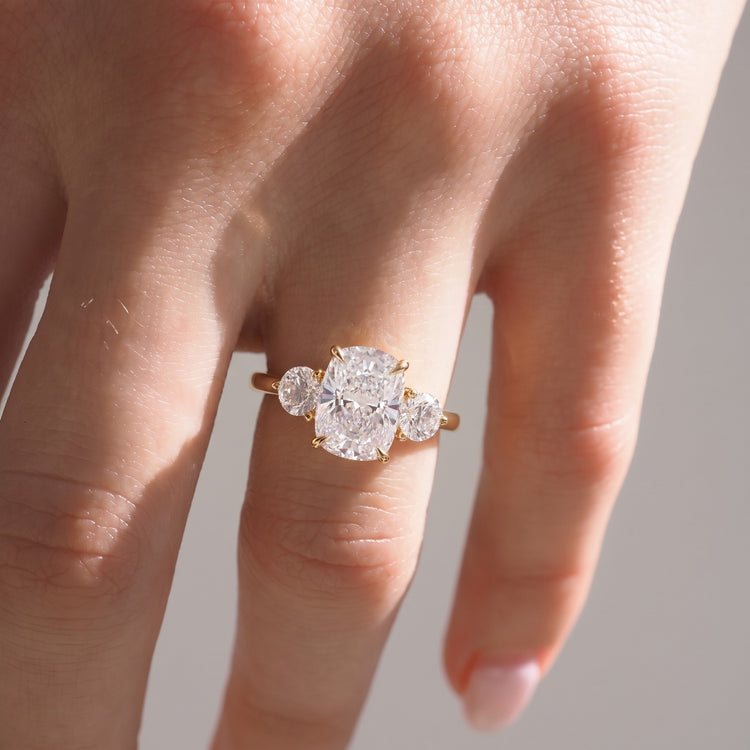
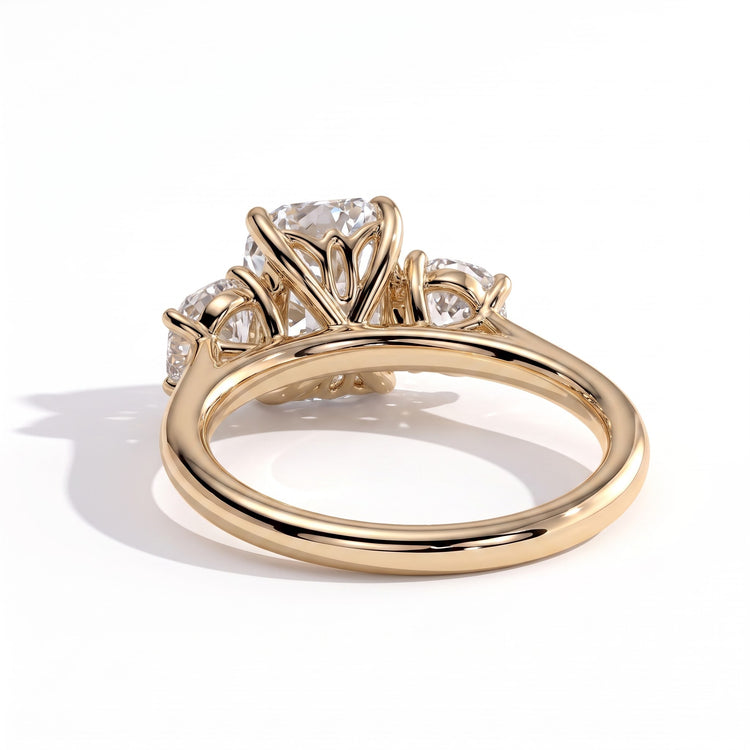
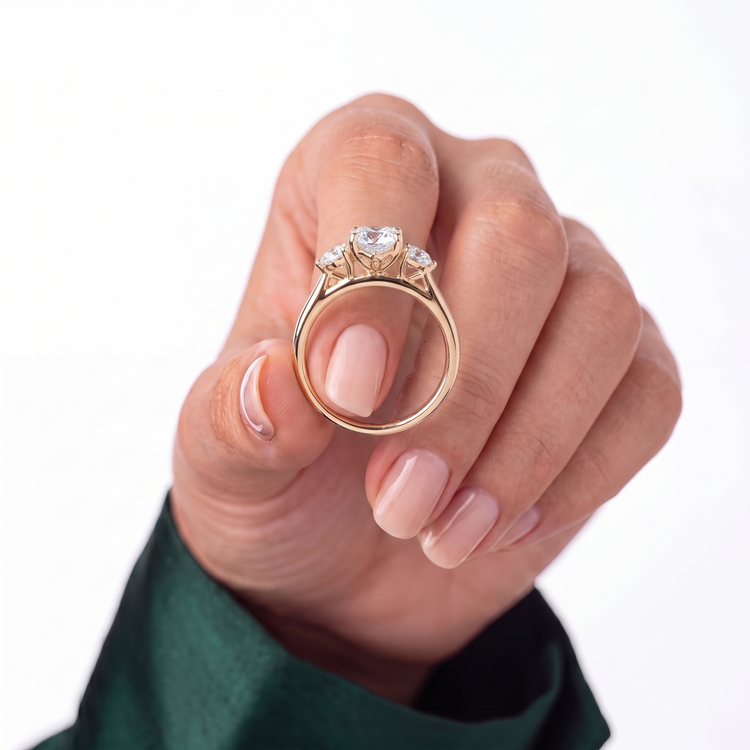


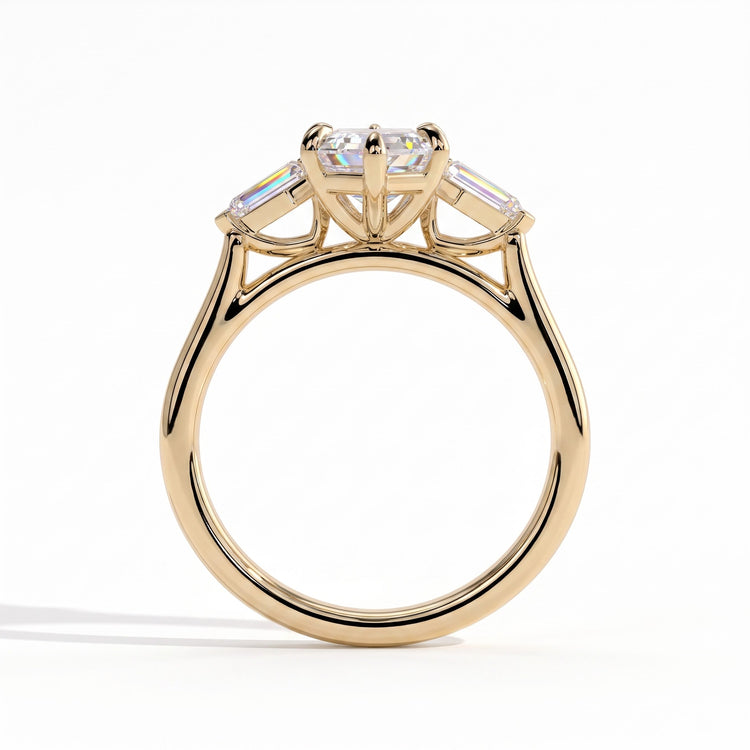
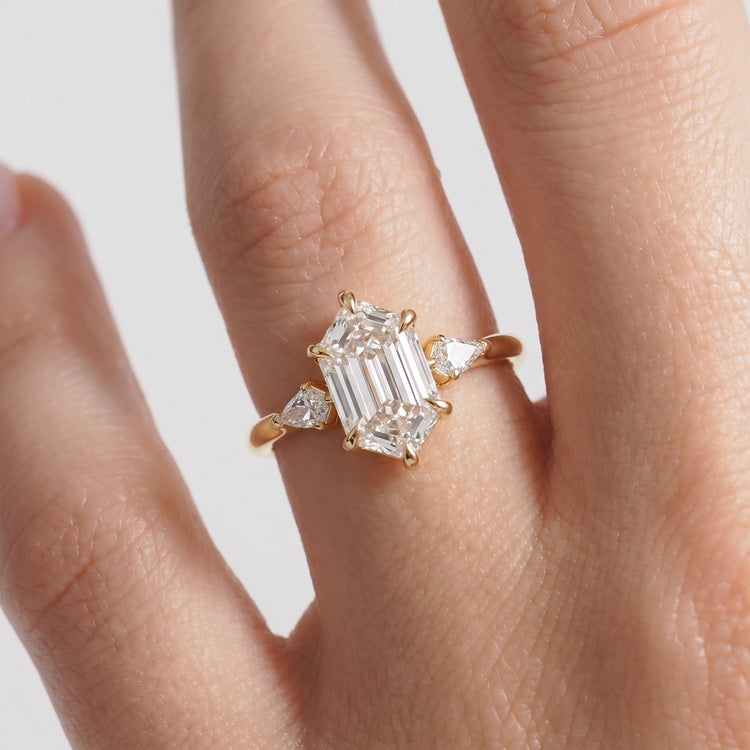

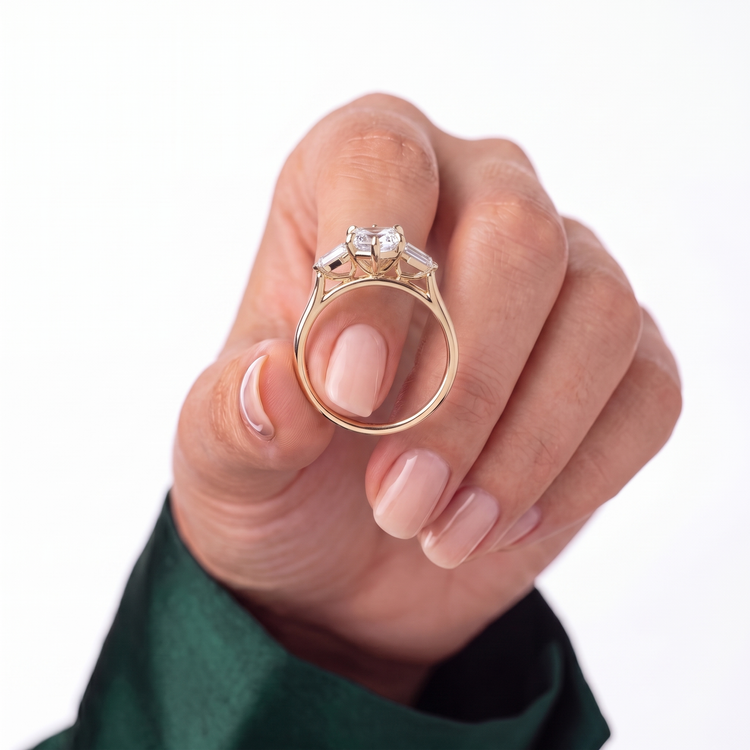


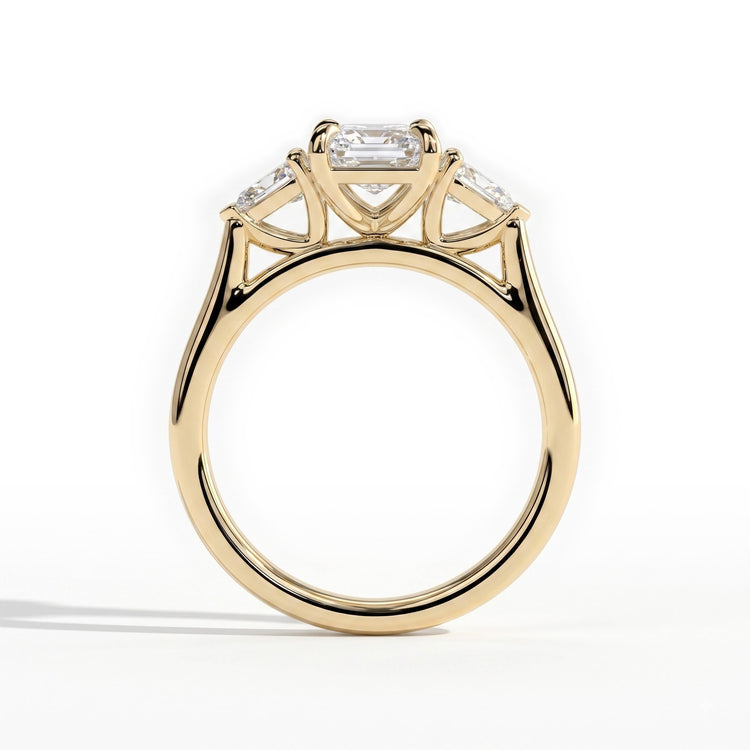

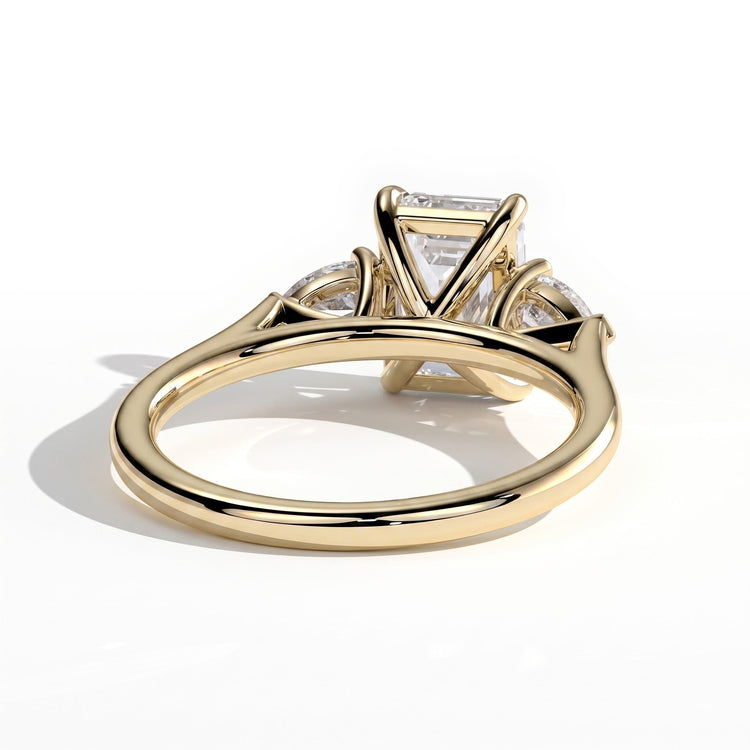
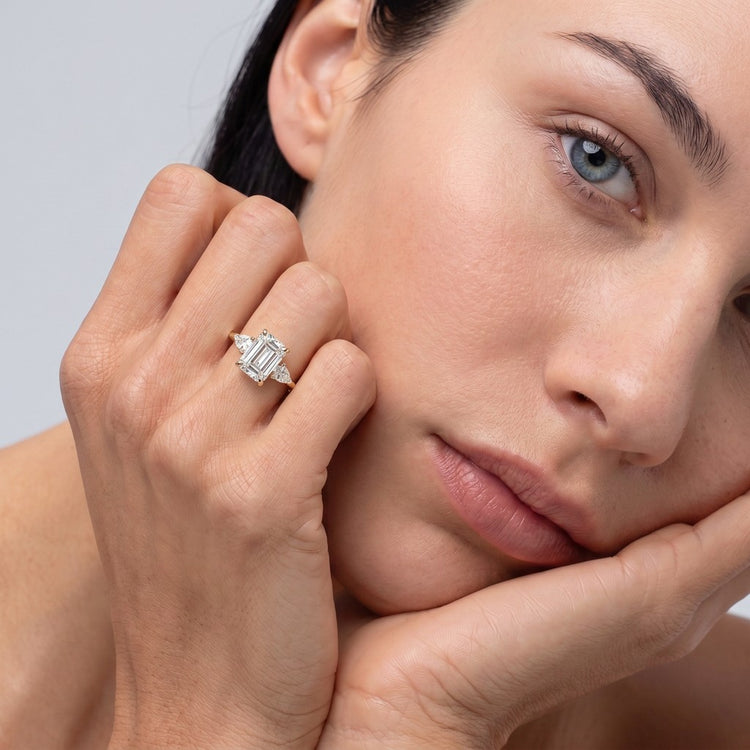


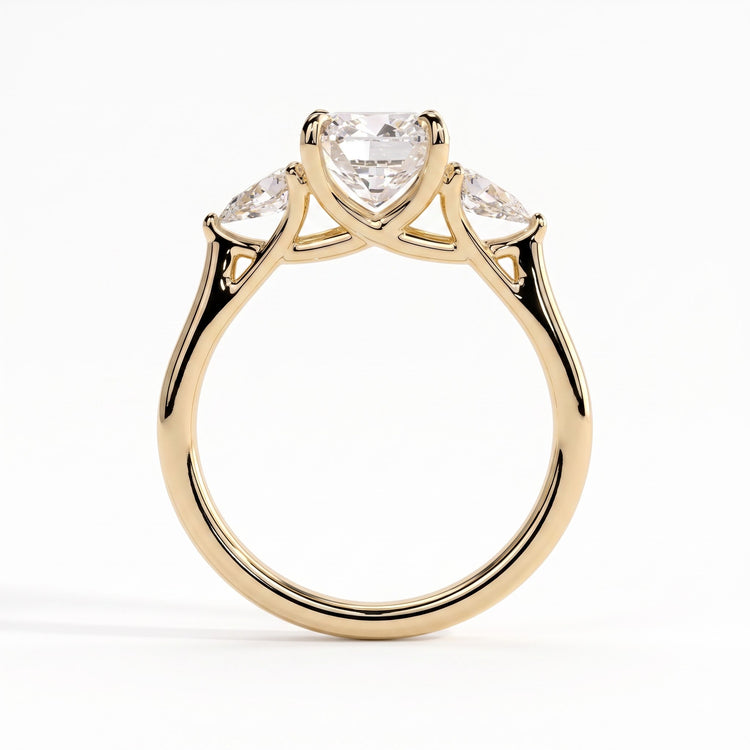

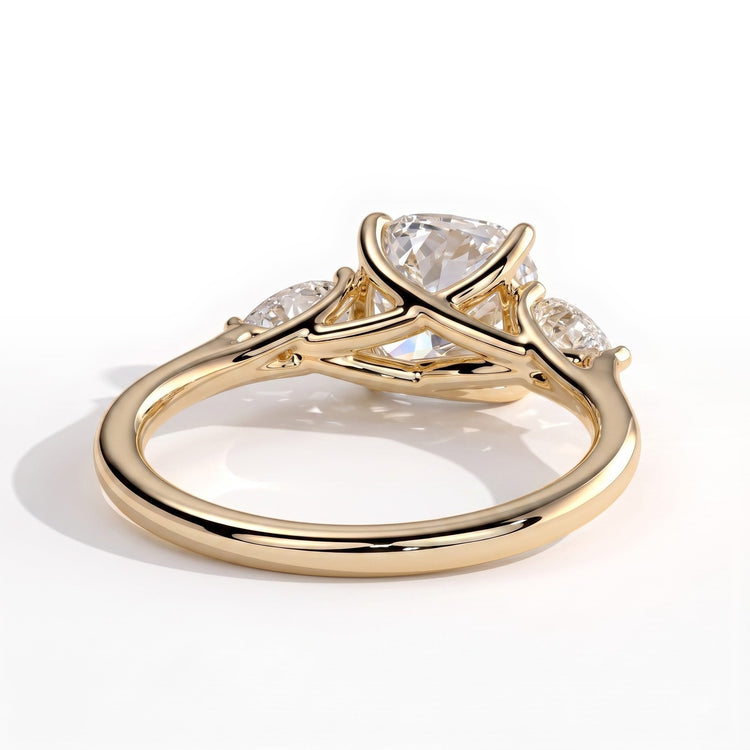
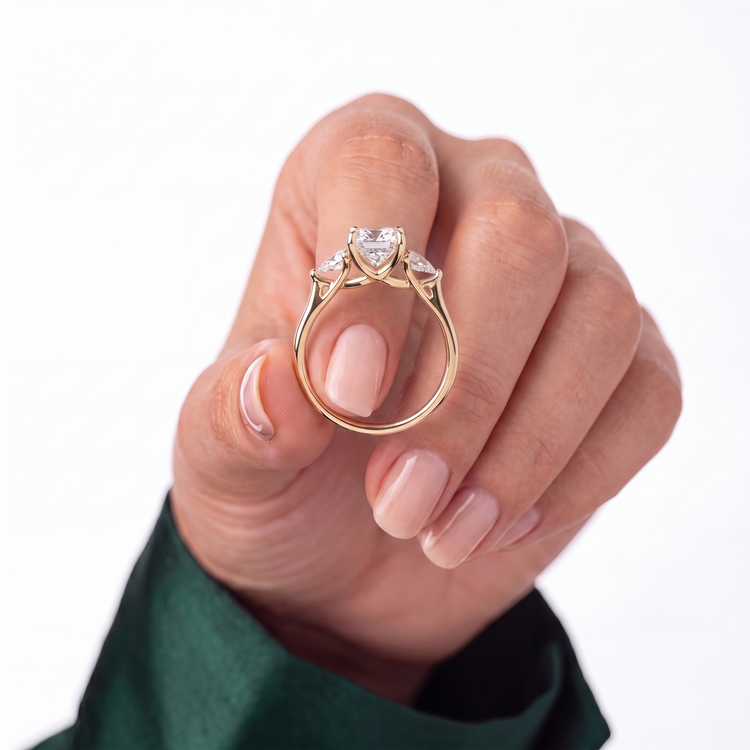


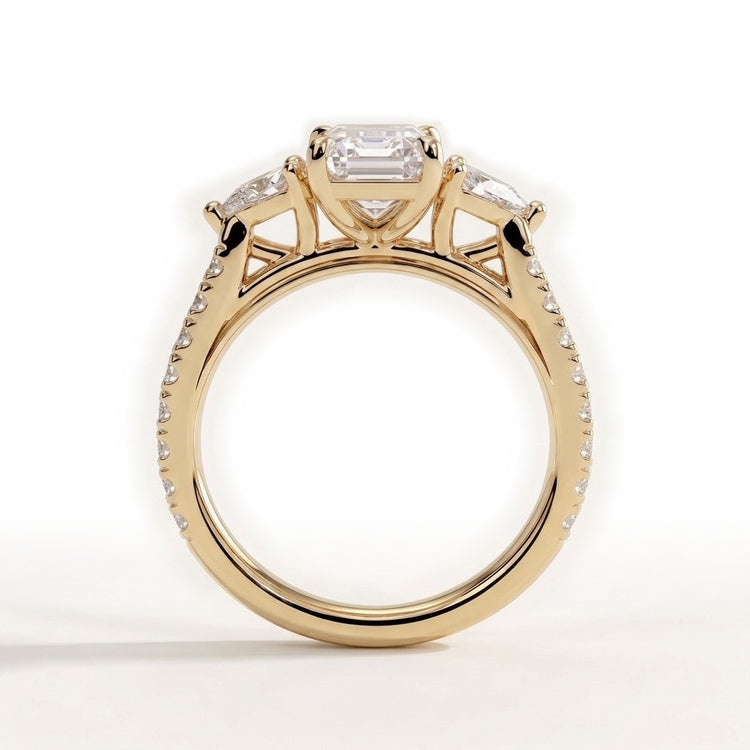
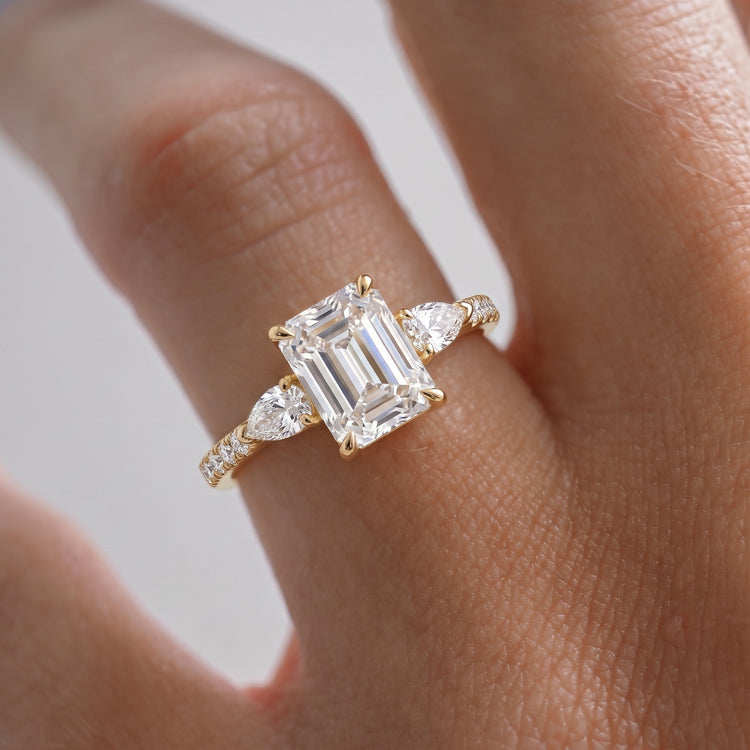
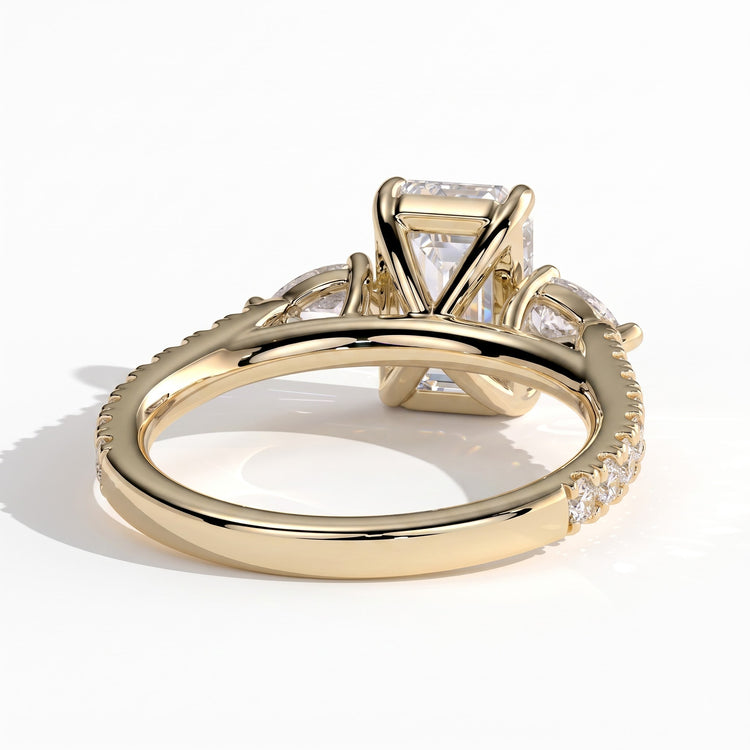
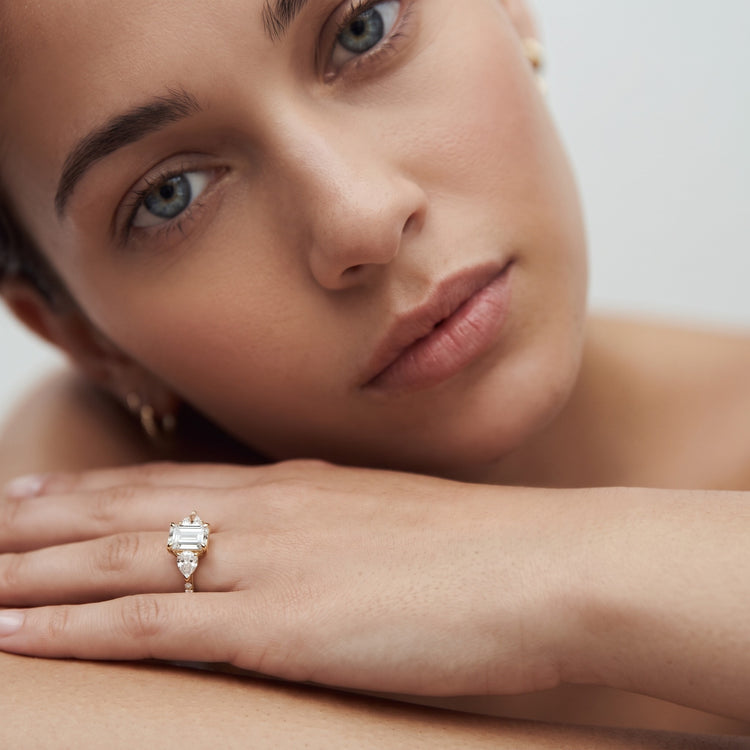


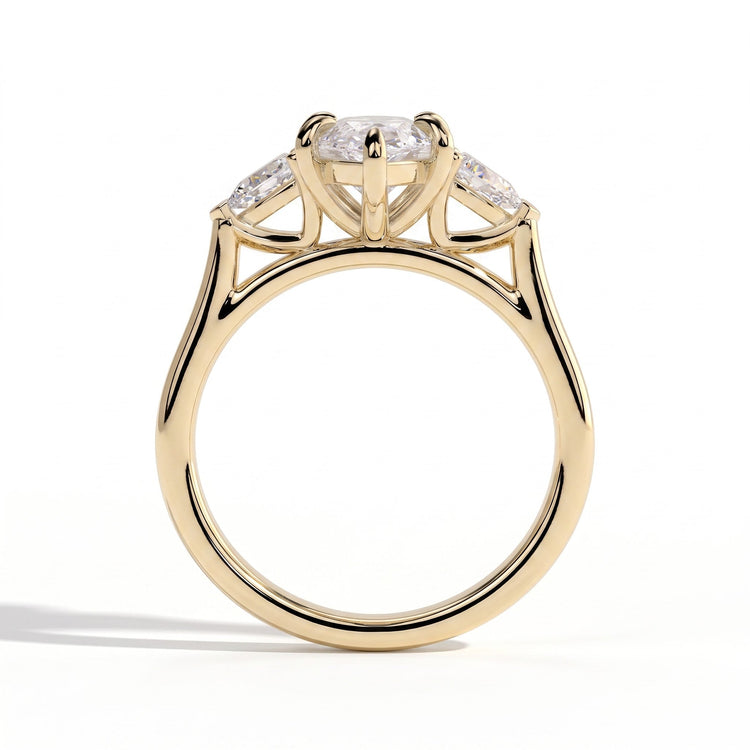
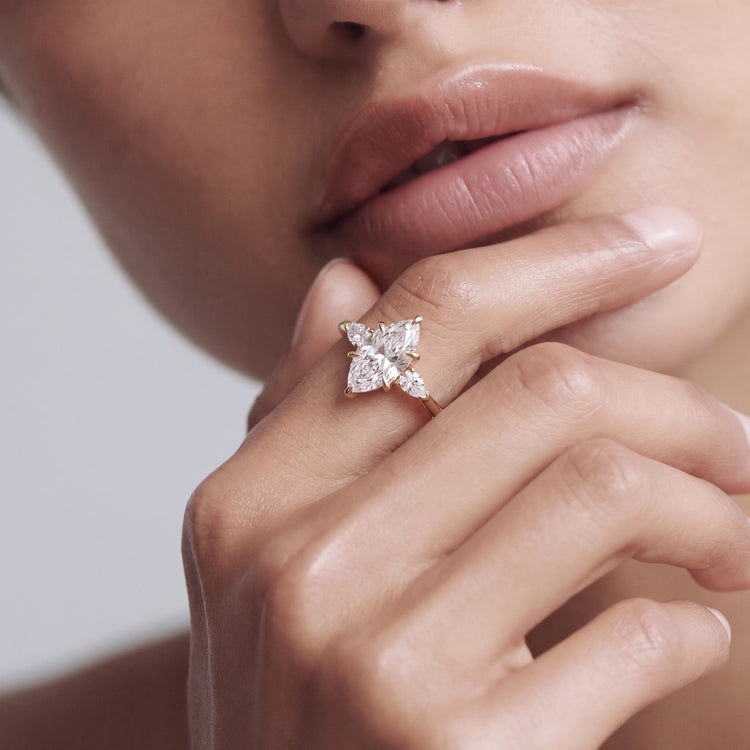
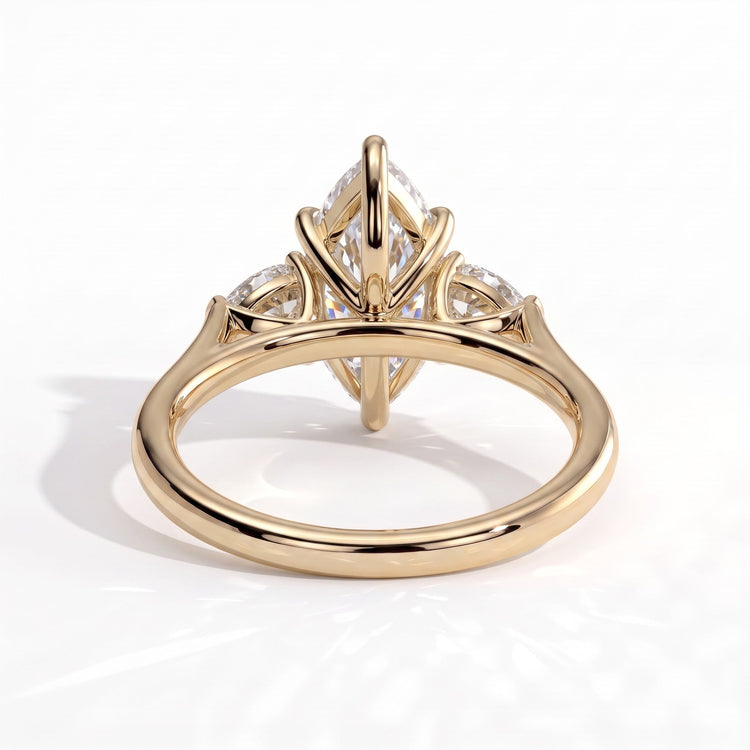
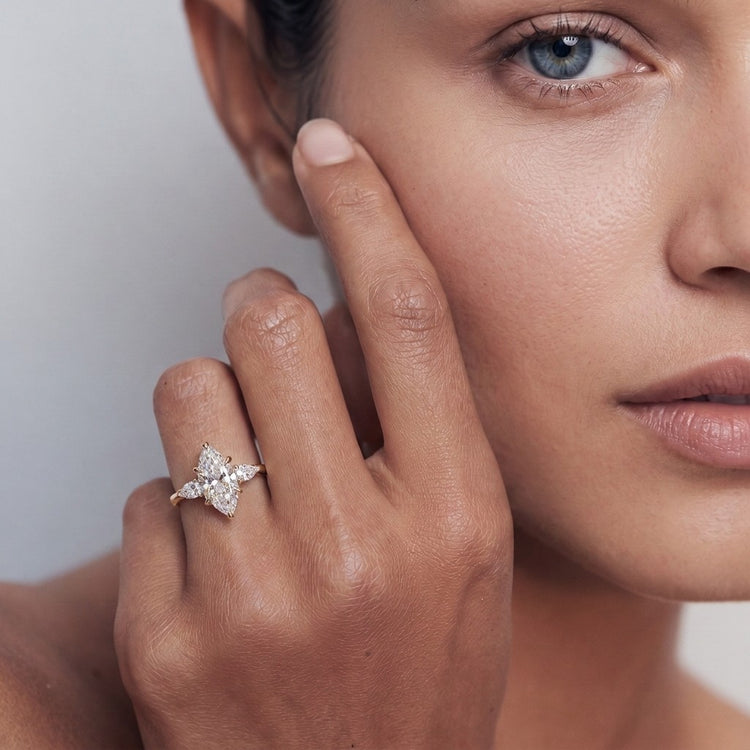


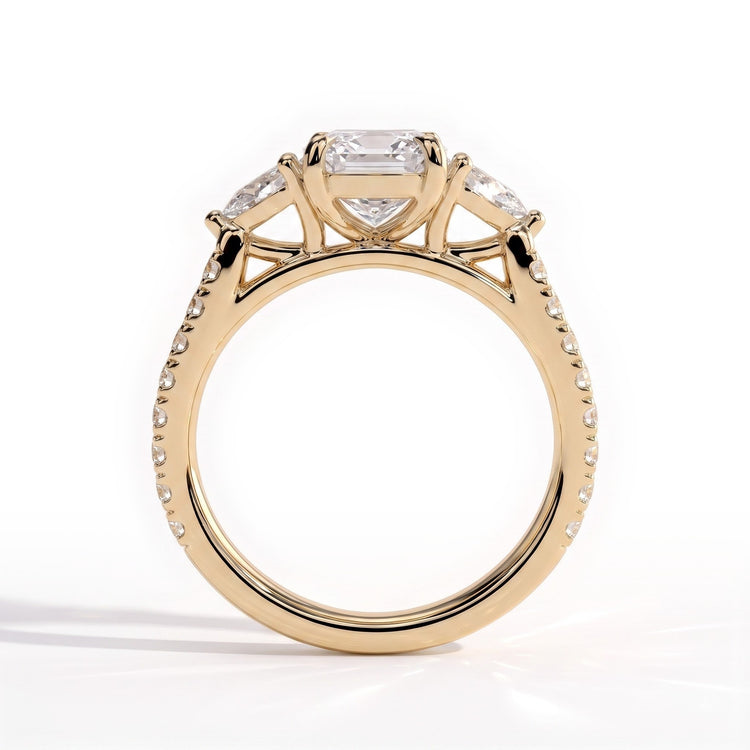
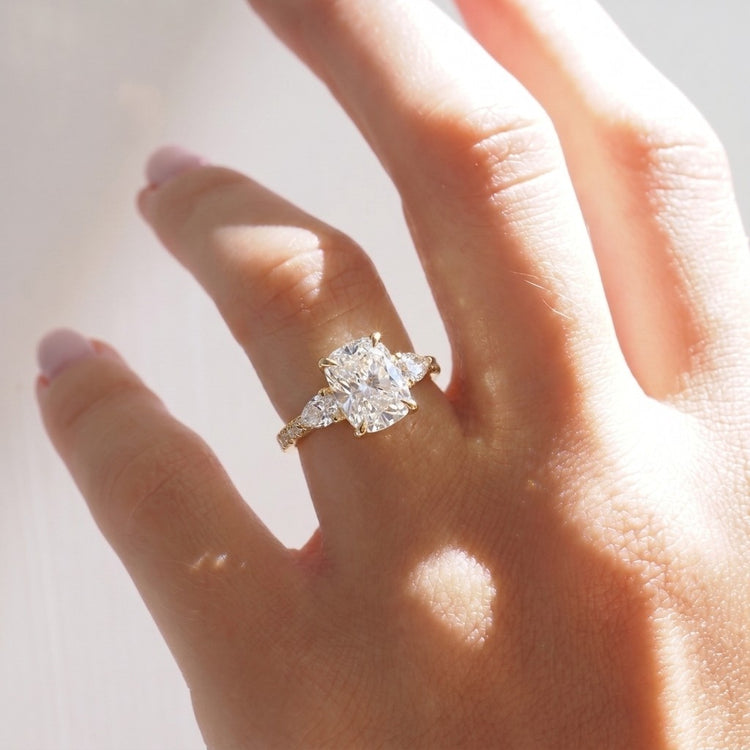
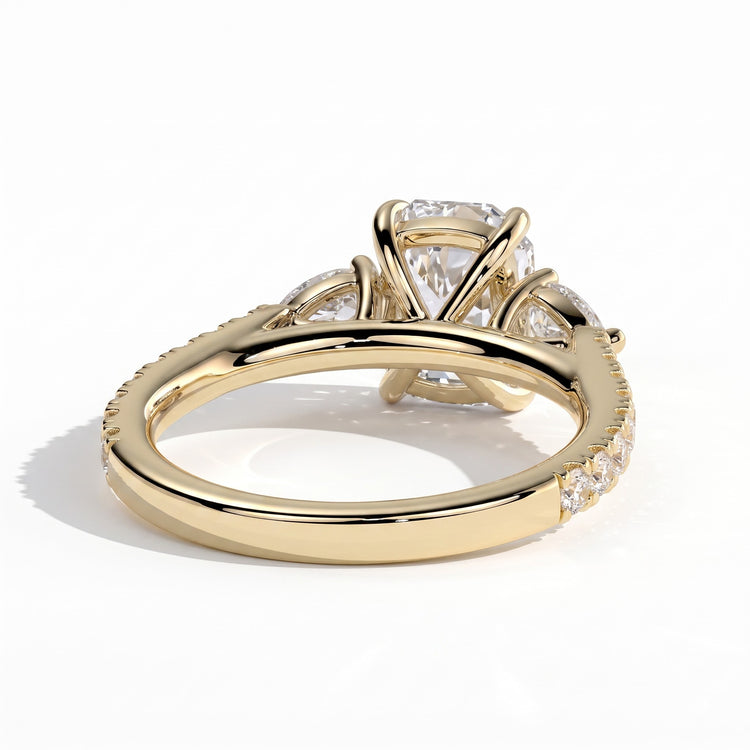
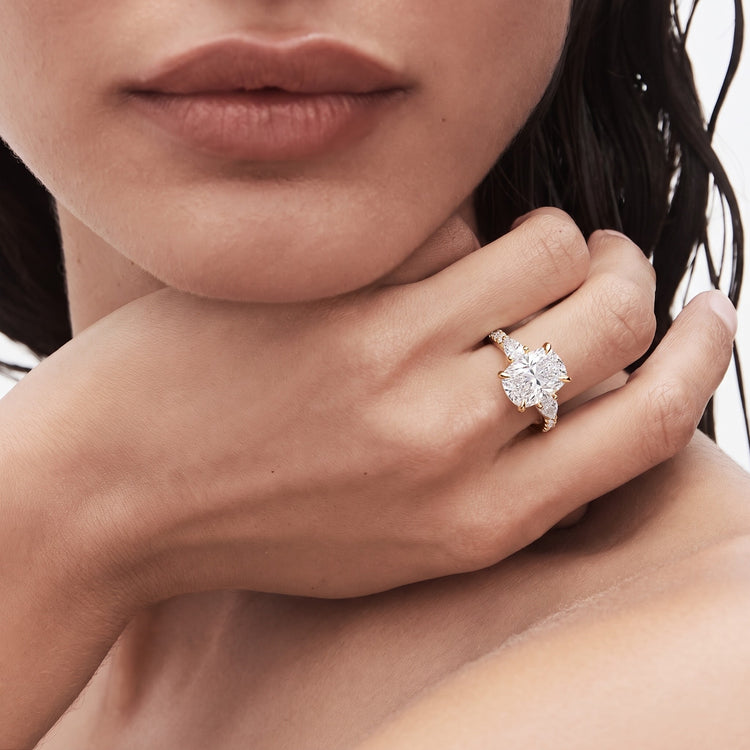


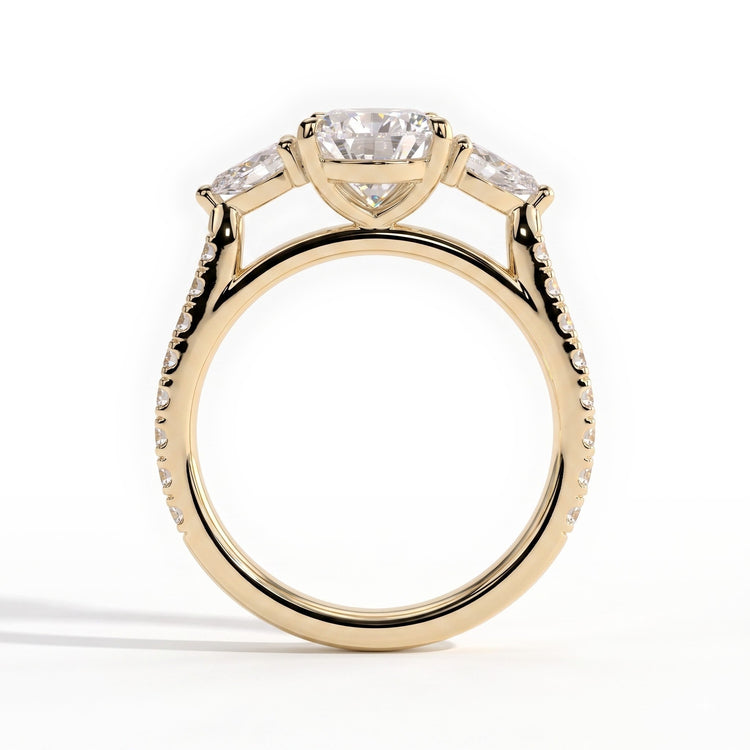
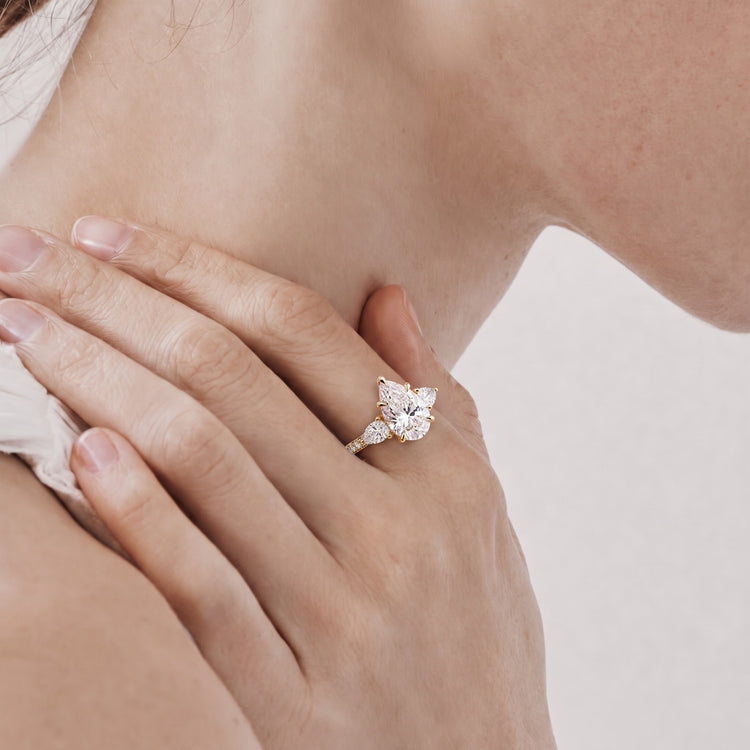
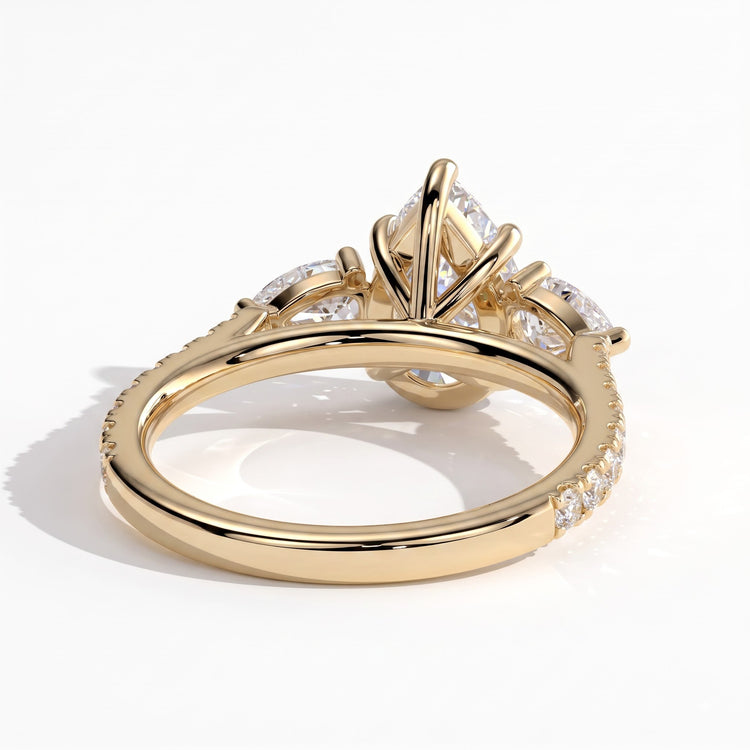
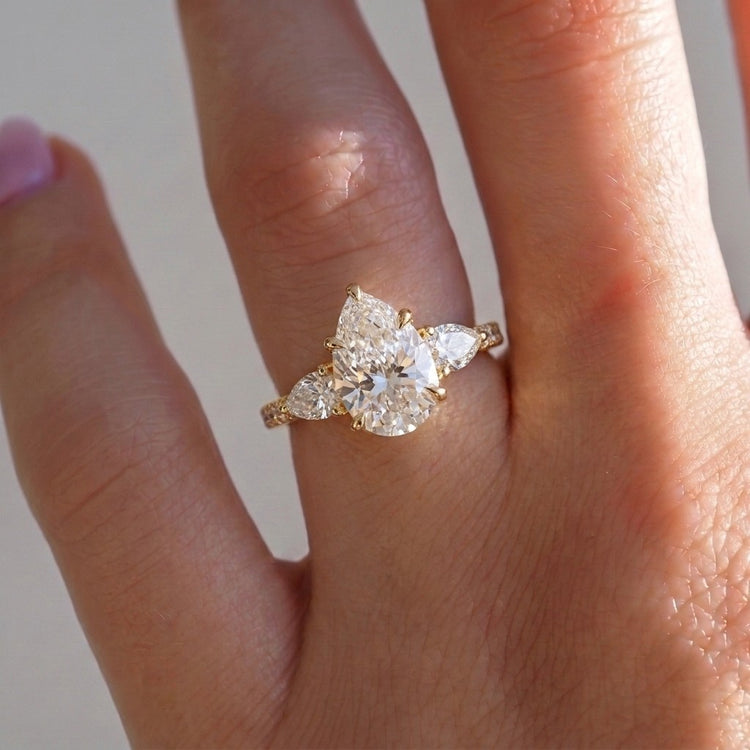


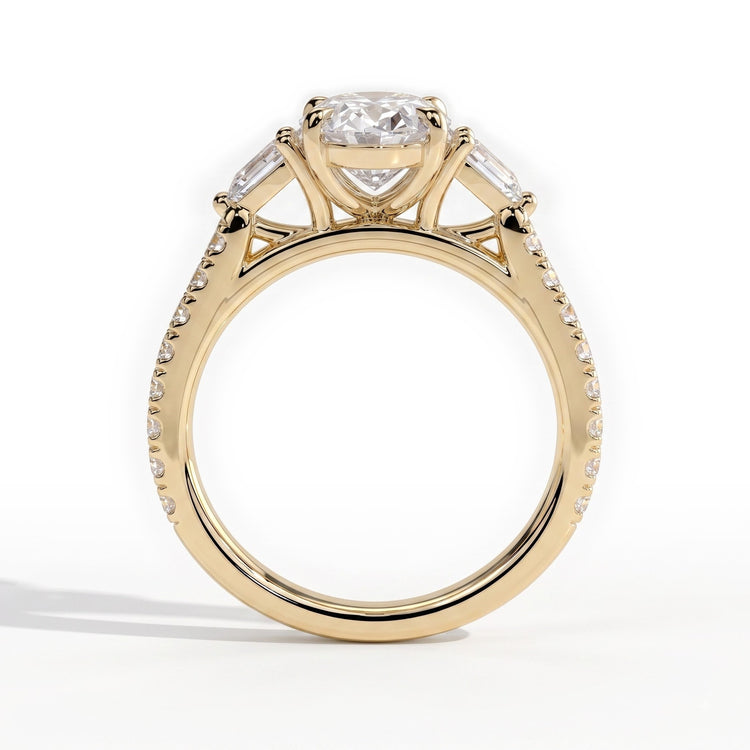
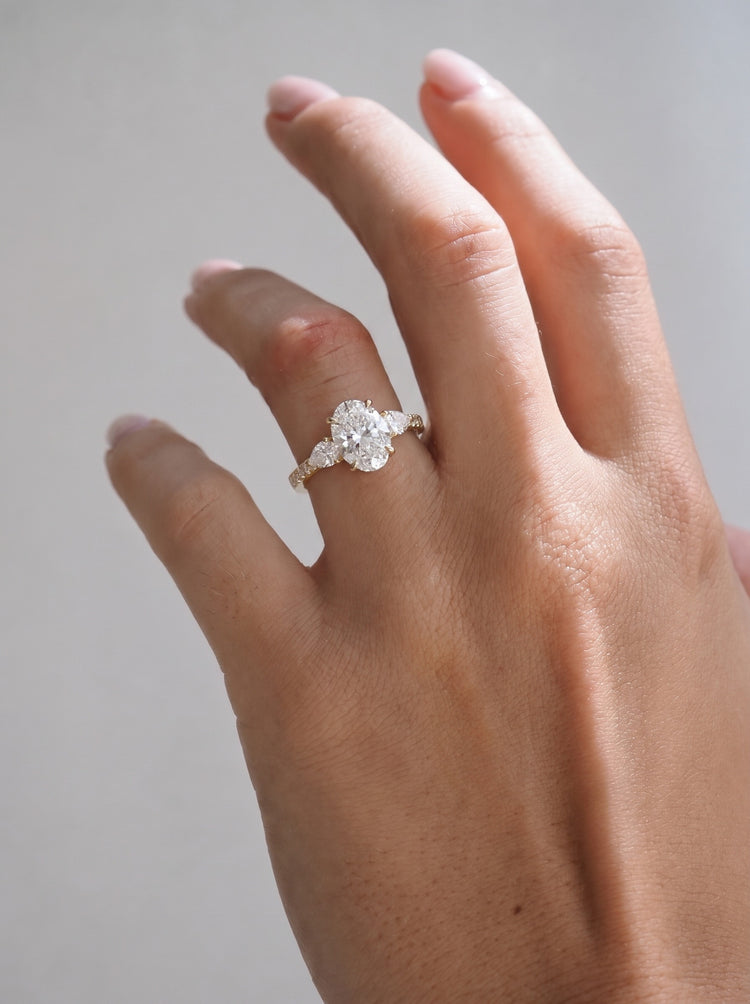
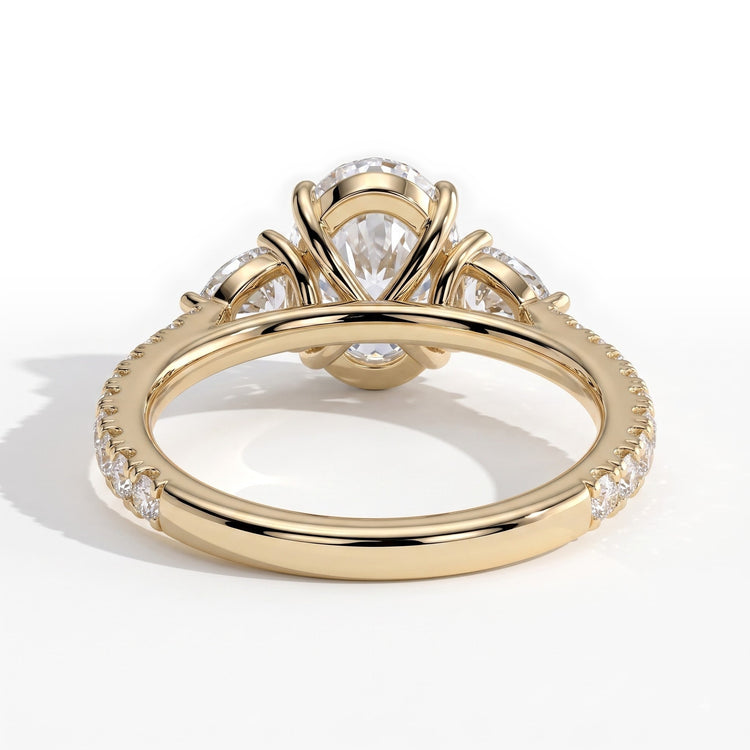
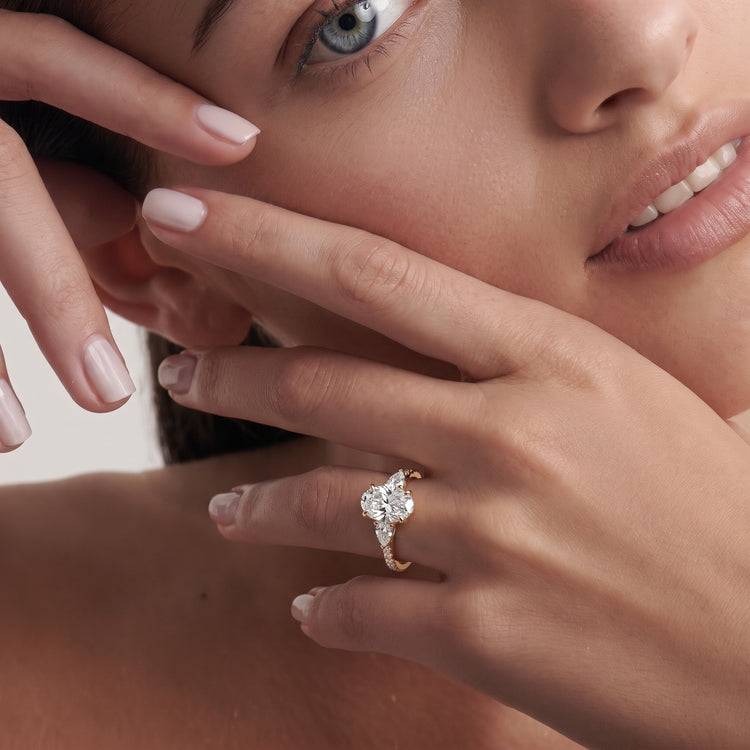




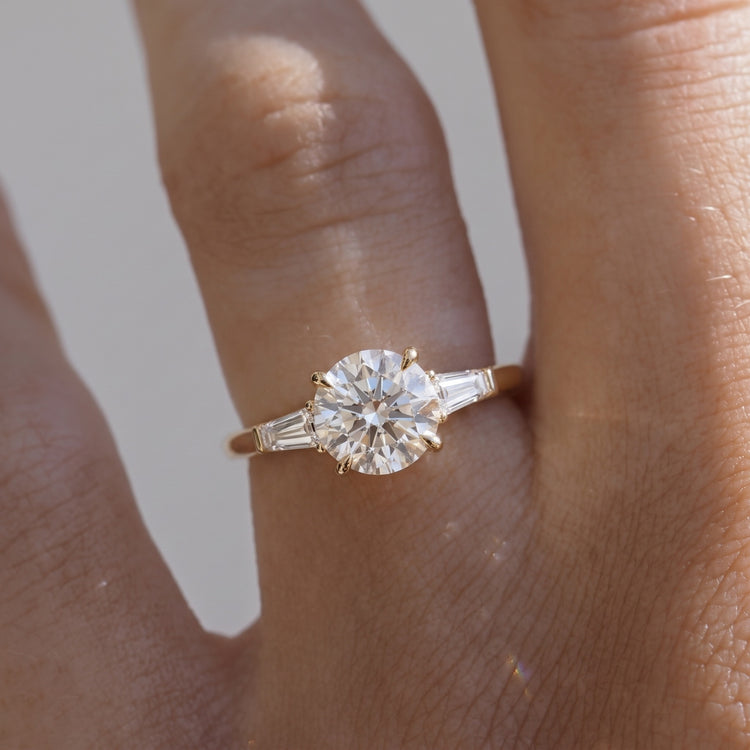
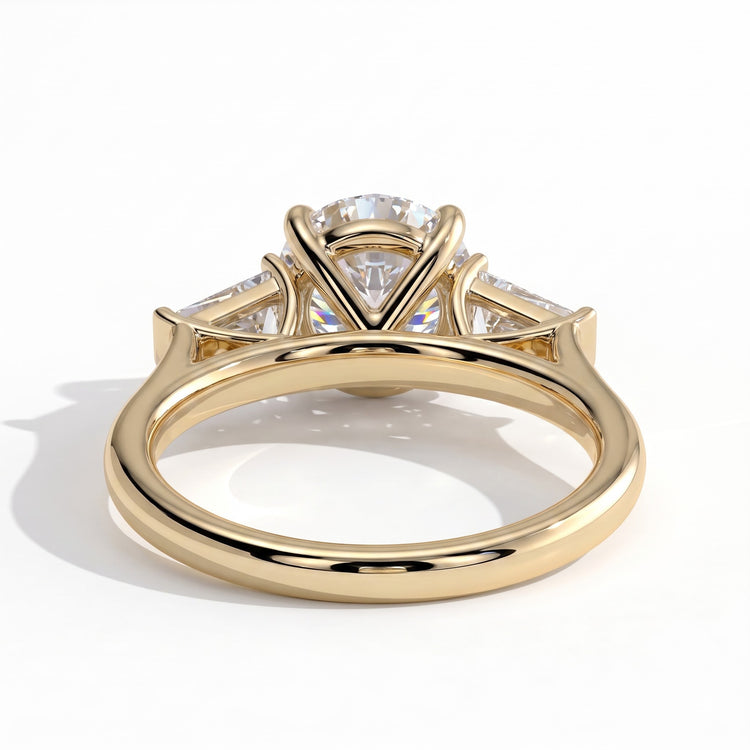


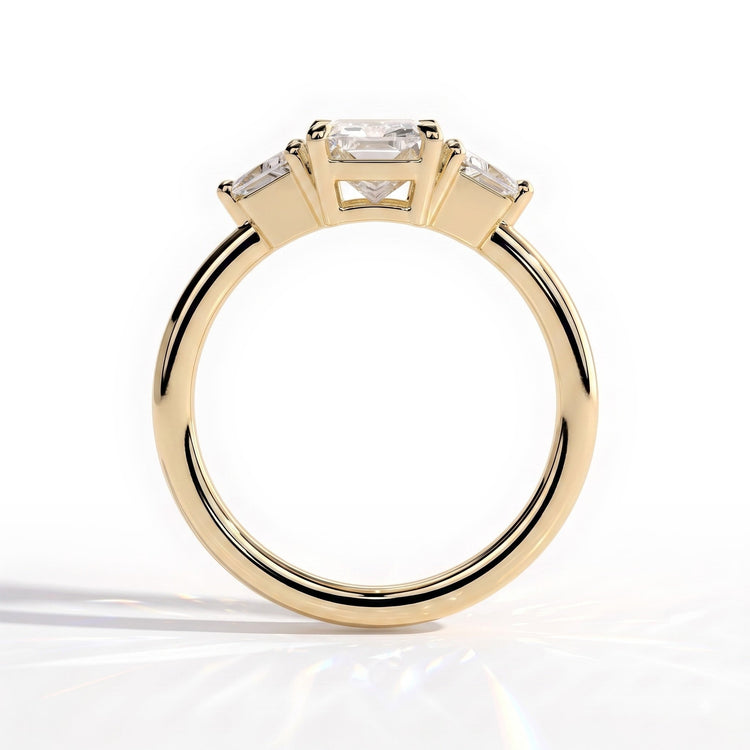
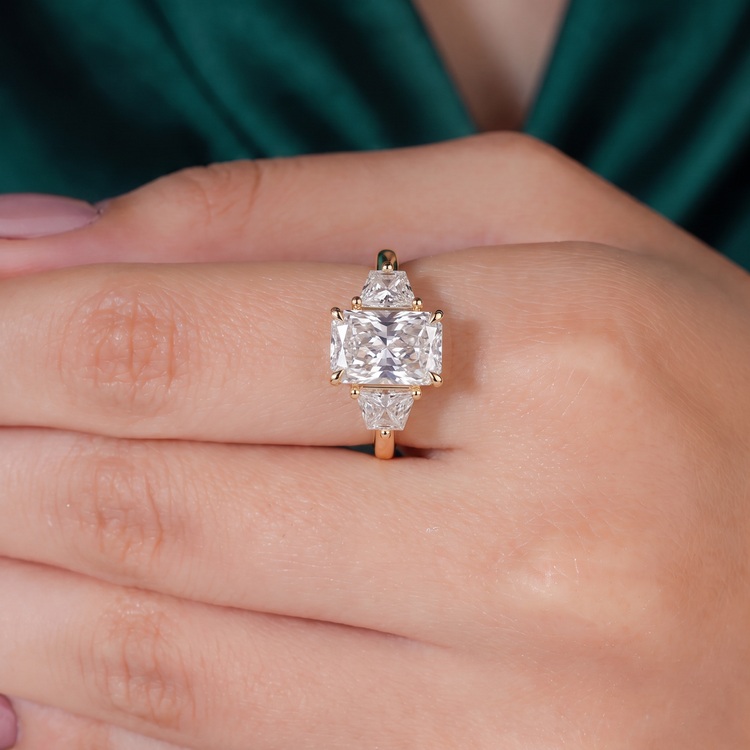


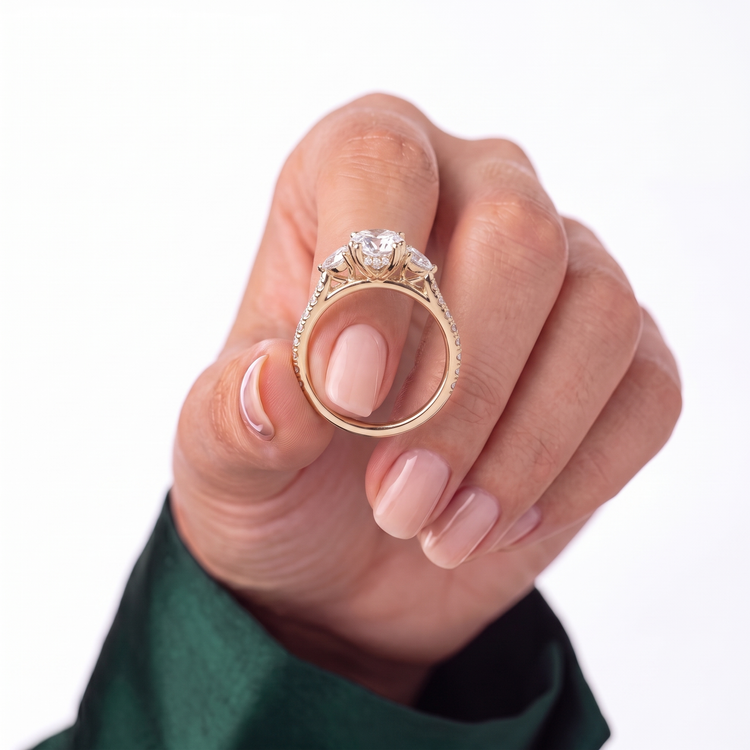


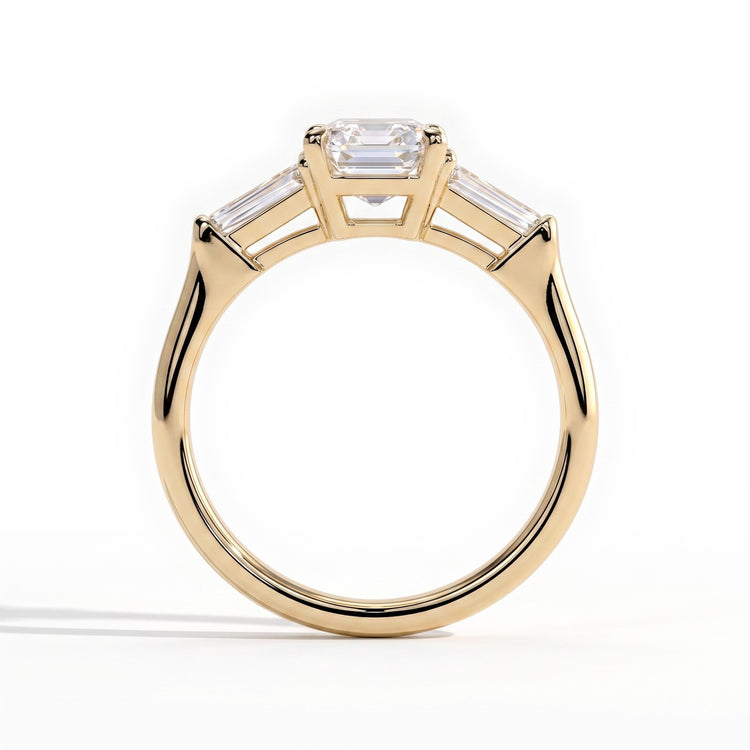
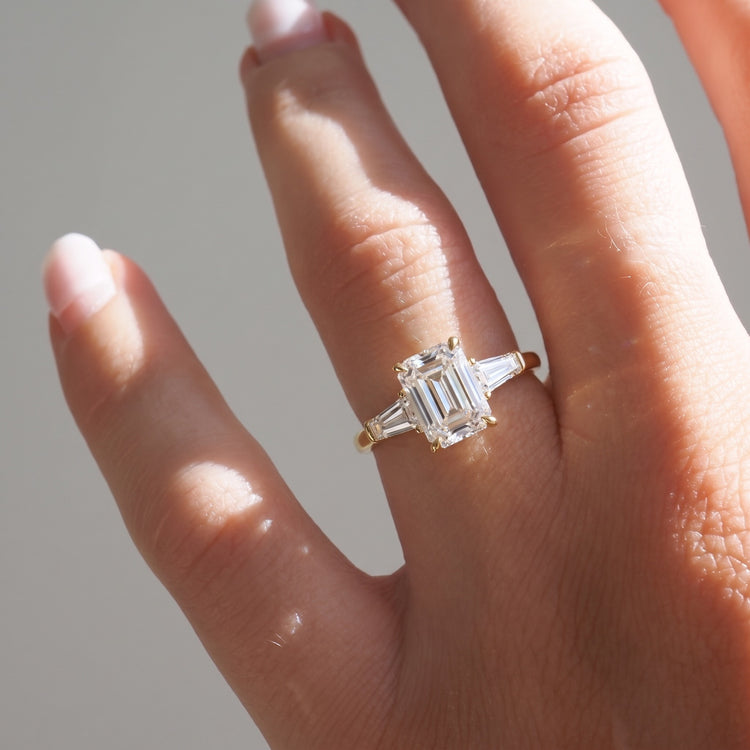
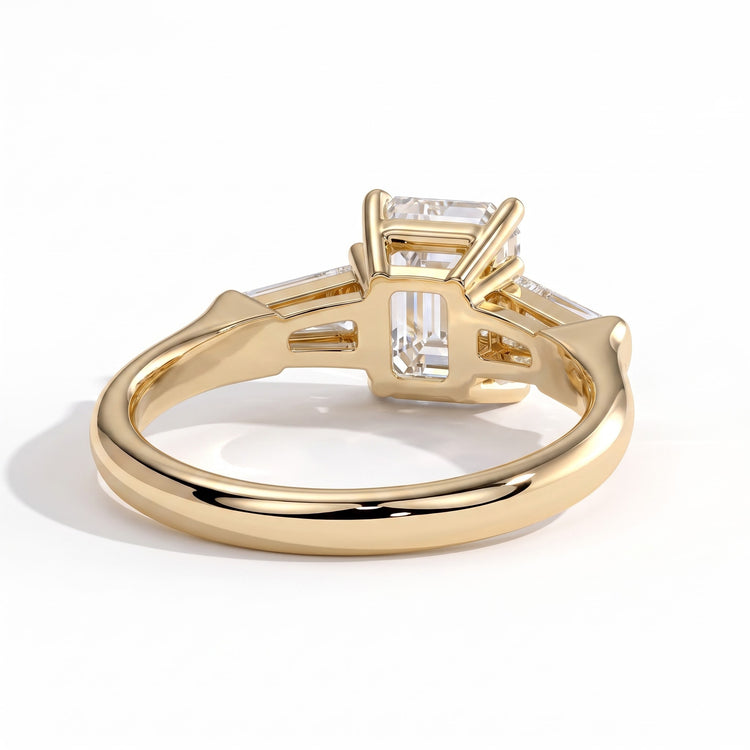


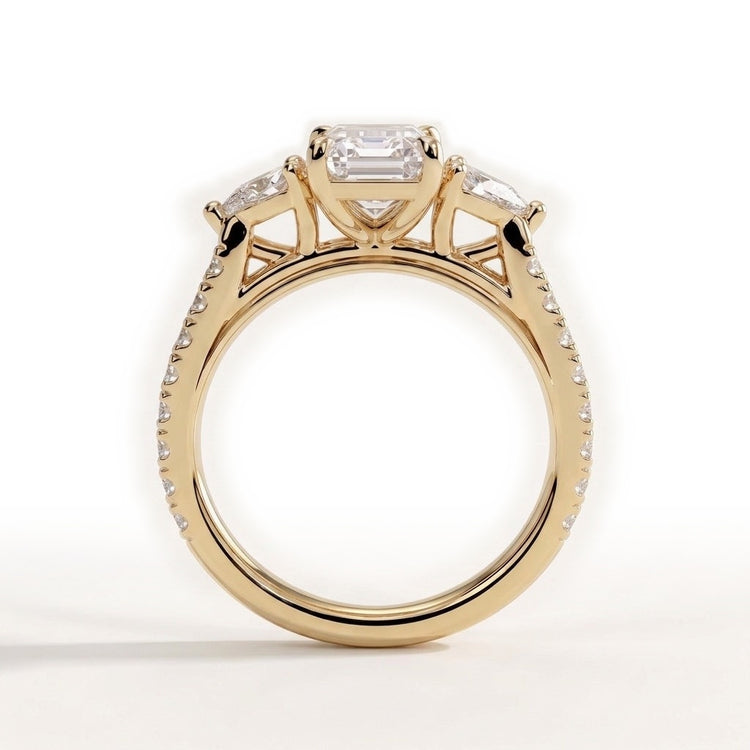

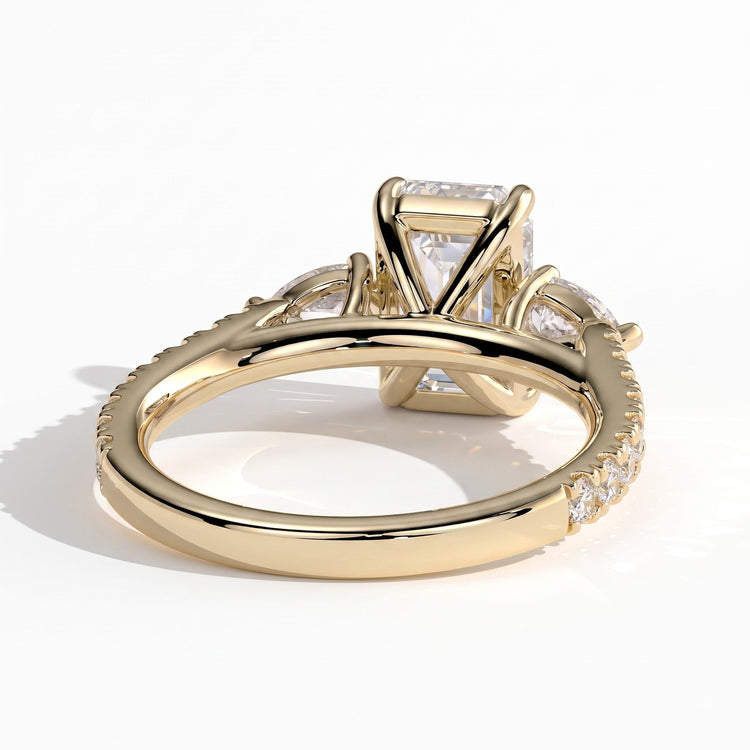
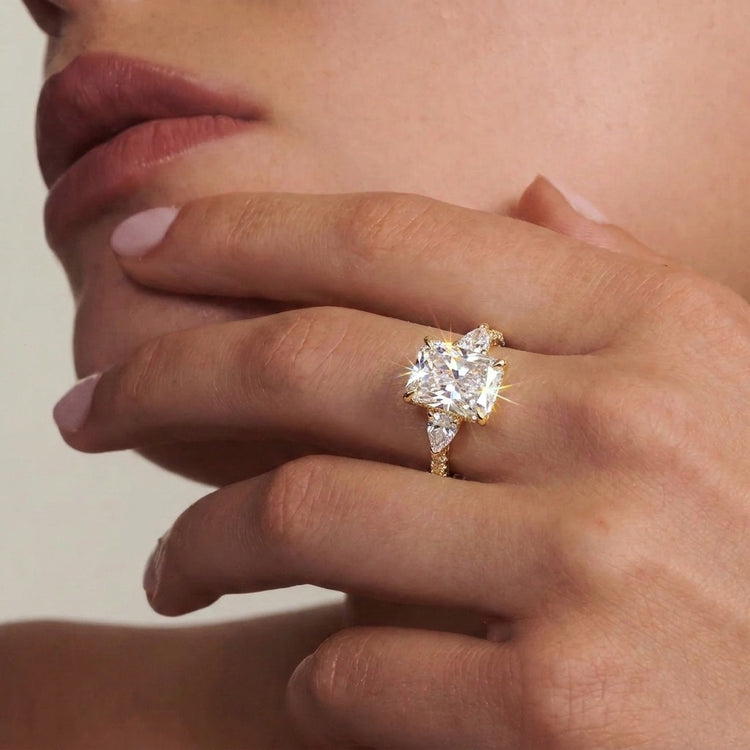


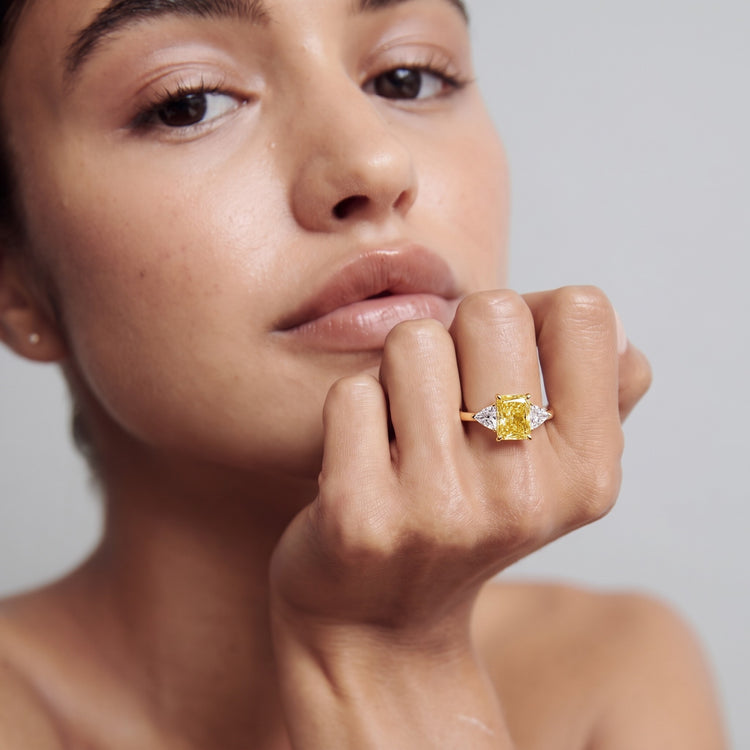





Lab grown diamond engagement rings, handmade for your moment
An engagement ring is more than jewellery. It stands for a promise meant to last a lifetime. That is why every BEUSÉA engagement ring is made by hand only after you order it, with a real lab grown diamond, in your choice of precious metal and in your ring size. Whether a classic solitaire, a modern hidden halo or a romantic vintage ring: our collection offers lab grown diamond engagement rings in more than ten diamond shapes, in yellow, white and rose gold or platinum, with centre stones from 1 to 4 carats.
On this page you will find everything you need to choose your engagement ring: what makes a lab grown diamond special, which diamond shape and setting suit you, which gold is right, how big a carat looks on the hand and how to find the right ring size.
Why choose a lab grown diamond engagement ring?
More and more couples deliberately choose an engagement ring with a lab grown diamond. The reasons are simple:
- A real diamond: chemically, physically and optically a diamond – not a simulant, not cubic zirconia, not moissanite.
- Traceable origin: grown under controlled conditions in a laboratory instead of a mine, so you know exactly where your stone comes from.
- Top quality: because lab grown diamonds are grown under controlled conditions, the highest colour grade D is attainable – a rarity among mined diamonds. Every one of our centre stones is D colour with VS1 clarity.
- More diamond for your vision: choose a larger, purer centre stone with no compromise on brilliance or fire.
- A good feeling: no mining, far less impact on nature – and we plant a tree for every ring.
What is a lab grown diamond?
A lab grown diamond is a real diamond that has grown in a laboratory. Like a natural diamond, it consists of pure carbon, has the same crystal structure and the same hardness of 10 on the Mohs scale – the highest hardness any material can reach. Its fire, brilliance and sparkle are identical.
Lab grown diamonds are created with one of two methods. With the CVD method (chemical vapour deposition) the diamond grows layer by layer from a carbon-rich gas. With the HPHT method (high pressure, high temperature) the pressure and heat deep inside the earth are recreated. Both methods produce real diamonds.
To the naked eye – and even under a jeweller's loupe – a lab grown diamond cannot be told apart from a natural diamond. Only specialist gemmological equipment can identify its origin. Read more in our guide Lab grown vs. natural diamond and under Diamond types.
Our quality promise: D colour, VS1 clarity, IGI certified
In an engagement ring, the centre stone matters most. That is why BEUSÉA works to fixed standards, without exception:
- Colour D: the highest grade on the D-to-Z scale. A D diamond is completely colourless with no hint of yellow – in white gold as well as in platinum.
- Clarity VS1: tiny inner features are hard to find even at 10× magnification, and the stone looks completely clean to the naked eye. Higher grades such as VVS look no different on the hand, which is why we deliberately choose VS1.
- IGI certificate: every diamond of 0.5 carat or more comes with a report from the International Gemological Institute (IGI), independently documenting the carat weight, colour, clarity and cut of your stone.
- Four quality checks: every ring is inspected after casting, after the stones are set, after polishing and in a final inspection.
Many jewellers use colours D to G for engagement rings. We use only D, because an engagement ring is worn for a lifetime – and because this is exactly where a lab grown diamond shows its greatest strength.
The 4Cs: how to recognise a good diamond
The quality of a diamond is described by the 4Cs:
- Cut: determines how much light the diamond returns. A good cut is the most important factor for sparkle.
- Colour: ranges from D (colourless) to Z (noticeably yellow). Our white lab grown diamonds are always D.
- Clarity: describes natural features inside the stone. VS1 means completely clean to the naked eye.
- Carat: the weight of the diamond. One carat equals 0.2 grams.
Explained in detail in our guide The 4Cs of diamonds.
The right diamond shape for your engagement ring
The diamond shape shapes the character of your ring more than any other detail:
- Round brilliant: the classic with the strongest sparkle of all cuts. Timeless and suited to every setting. → Round engagement rings
- Oval: visually lengthens the finger and looks larger than a round diamond of the same weight. One of the most popular shapes for engagement rings. → Oval engagement rings
- Emerald cut: long step facets create a clear, elegant flash rather than glitter – for a quietly luxurious look. → Emerald cut engagement rings
- Pear: combines the brilliance of a round with the elegance of a marquise – romantic and modern at once. → Pear engagement rings
- Cushion and elongated cushion: softly rounded corners with vintage charm; the elongated version looks especially elegant. → Cushion engagement rings
- Radiant: the clean outline of an emerald cut with the sparkle of a brilliant. → Radiant engagement rings
- Marquise and Dutch marquise: long and slender, with maximum presence on the finger. → Marquise engagement rings
- Distinctive cuts: Asscher, princess, elongated hexagon and old mine cut for anyone looking for something extraordinary.
Compare every shape in our guide Diamond shapes.
Settings and styles: from solitaire to hidden halo
The setting holds your diamond – and determines how it looks:
- Solitaire: a single diamond on a slim band. The timeless classic among engagement rings, with the centre stone in the spotlight.
- Hidden halo: a concealed row of small diamonds beneath the centre stone – simple from above, a sparkling detail from the side.
- Halo: a visible ring of diamonds around the centre stone makes it look larger and even more brilliant.
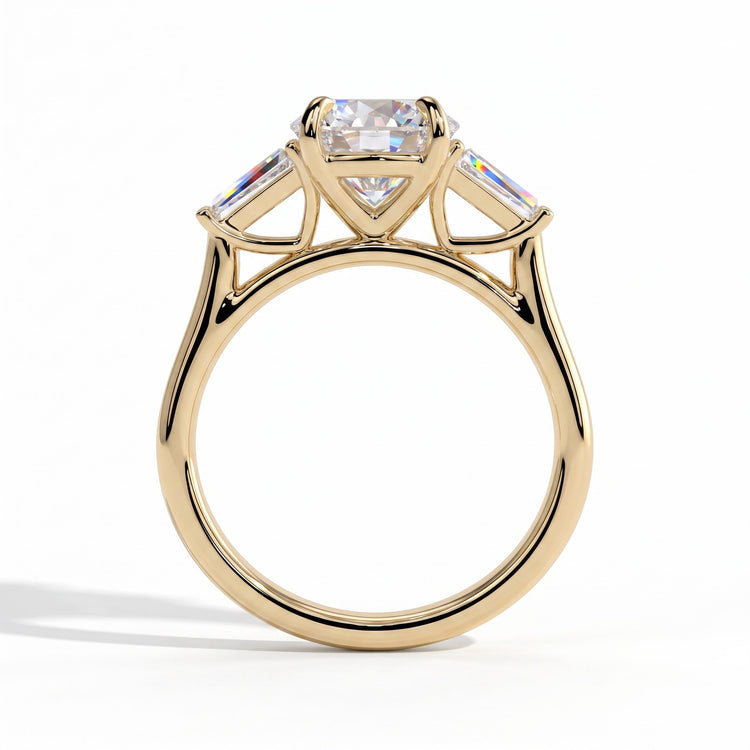
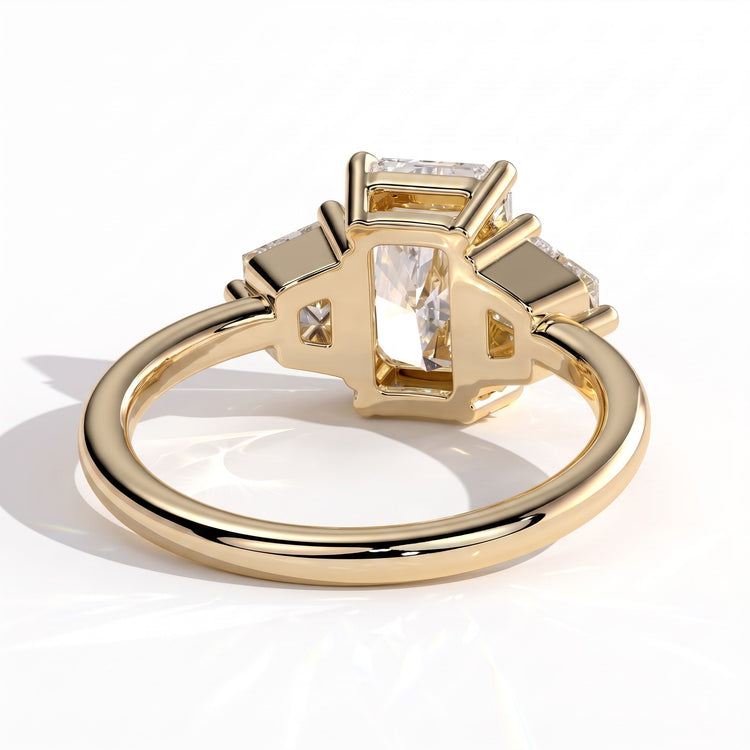
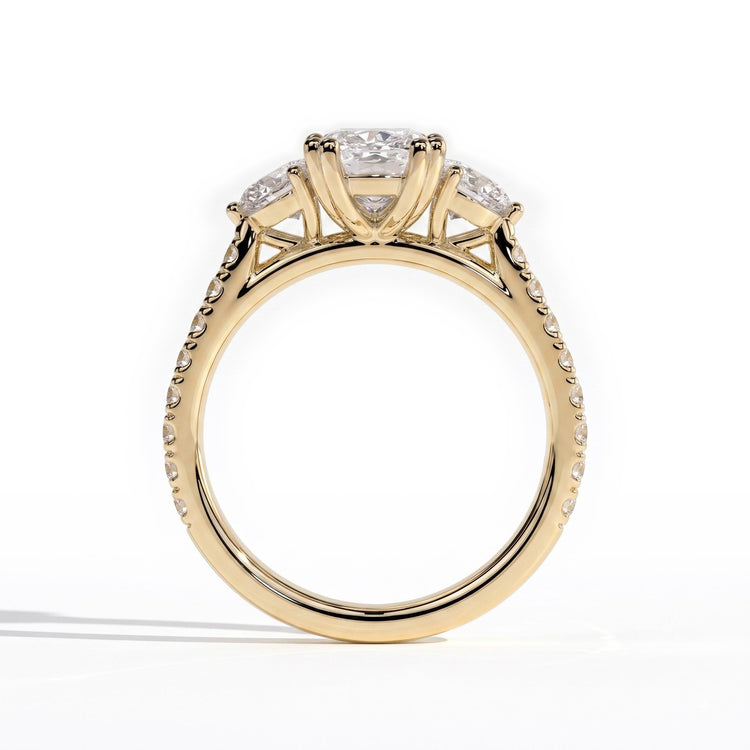
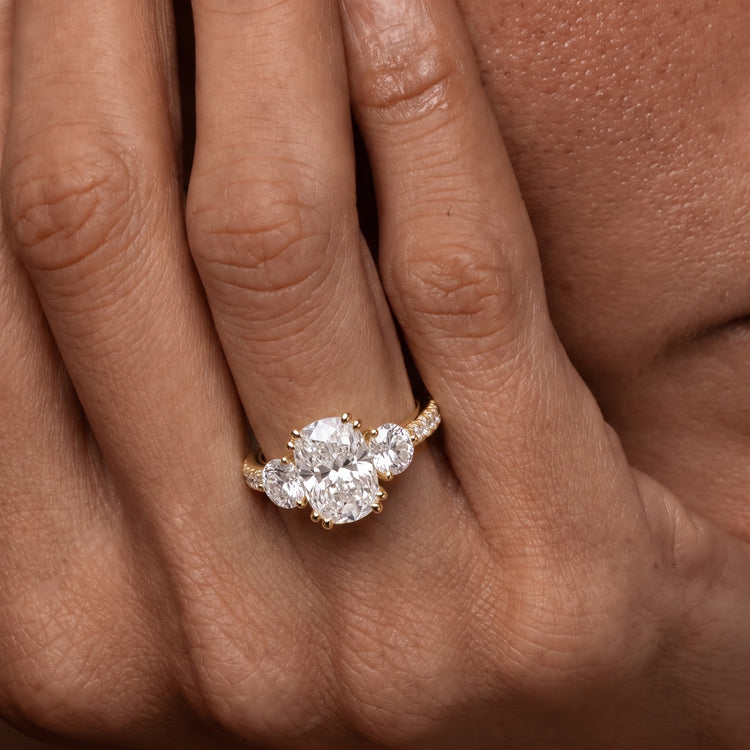
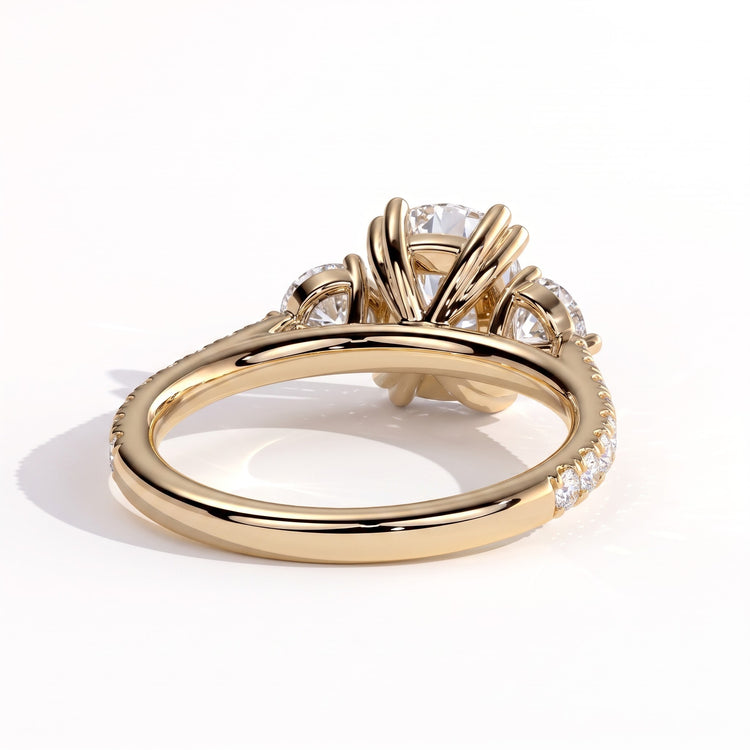
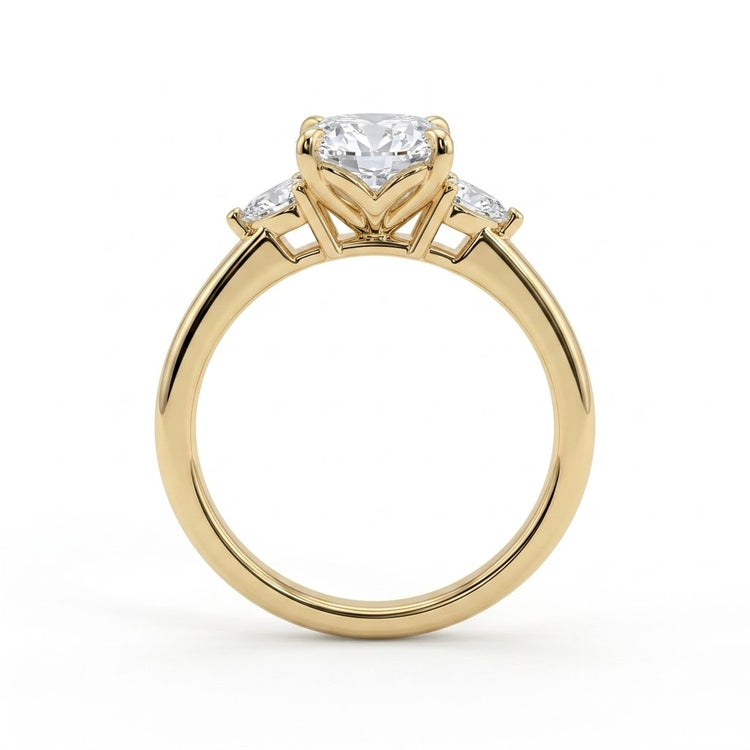
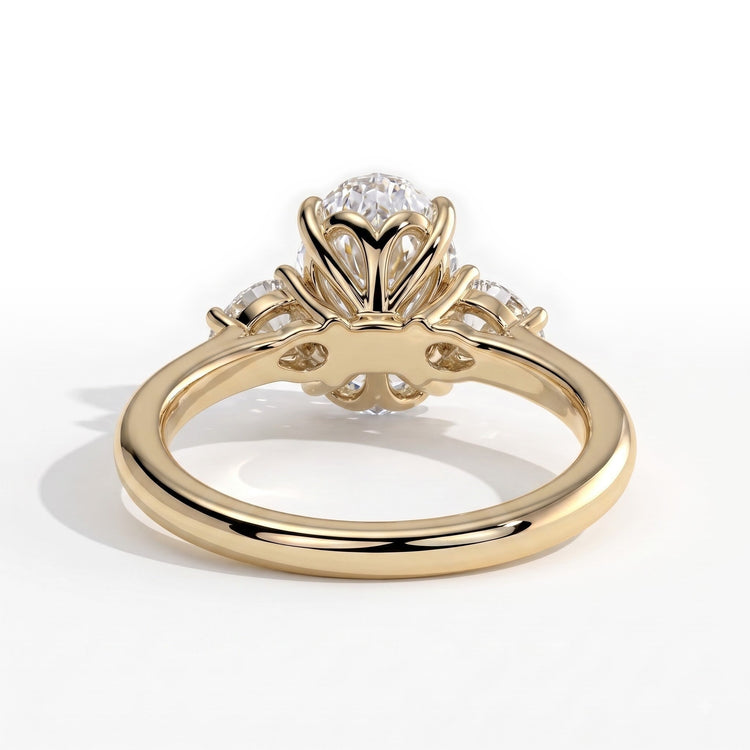
- Three-stone ring: three diamonds for past, present and future.
- Bezel setting: the diamond is completely surrounded by metal – modern, minimalist and especially well protected in everyday life. → Bezel engagement rings
- Pavé: small diamonds along the band for extra sparkle from every angle.
- East-west: the diamond sits horizontally on the finger – a modern, unexpected look. → East-west engagement rings
- Vintage: filigree patterns, engraving and floral details in the style of past eras.
- Cluster: several diamonds come together to form a flower or a leaf.
More in our guides Setting types and Ring styles.
Simple, modern or vintage: which style suits you?
- Simple engagement rings: a solitaire or bezel setting on a slim band is ideal for anyone who loves understated jewellery and wants to wear the ring every day.
- Modern engagement rings: east-west settings, elongated shapes such as elongated cushion or elongated hexagon and clean lines make a contemporary statement.
- Vintage engagement rings: old mine cuts, filigree work and engraving combine historic craftsmanship with a modern lab grown diamond.
- Romantic engagement rings: pear shapes, halo settings and floral clusters look playful and feminine.
Think about her daily life too: anyone who works a lot with their hands is well served by a low setting or a bezel setting.
Engagement ring in gold or platinum?
At BEUSÉA you choose the precious metal for every engagement ring:
- Yellow gold: warm, classic and in high demand again. A D-colour diamond creates a particularly beautiful contrast in yellow gold.
- White gold: cool and modern; emphasises the colourlessness of a D diamond.
- Rose gold: delicate and romantic, with a warm rosy tone.
- Platinum (950): naturally white, particularly dense and durable – the noblest metal for a ring for life.
14K or 18K gold? 14K (585) gold contains 58.5% pure gold and is especially hard-wearing in everyday life. 18K (750) gold contains 75% pure gold and shows a richer, more intense colour. Both are excellent choices for an engagement ring. More in our guide Precious metals for rings.
How big does a carat look on the finger?
Carat is a unit of weight, not a measure of size. How big a diamond looks depends on its diameter and shape. For round lab grown diamonds, these approximate values apply:
- 1 carat: approx. 6.5 mm
- 1.5 carats: approx. 7.4 mm
- 2 carats: approx. 8.1 mm
- 3 carats: approx. 9.3 mm
- 4 carats: approx. 10.2 mm
Oval, pear and marquise diamonds look larger at the same carat weight because more surface faces upward. A halo setting also makes the centre stone appear larger. On slender fingers, even a 1-carat diamond looks impressive; many choose 1.5 to 2 carats.
Coloured lab grown diamonds: pink, yellow and green
Besides colourless diamonds, we make engagement rings with coloured lab grown diamonds in pink, yellow and green. Natural coloured diamonds are among the rarest gemstones in the world; grown in a laboratory, these colours become attainable. An engagement ring with a pink or yellow lab grown diamond is an unmistakable statement – with the same hardness and brilliance as any diamond.
Finding the right ring size
Most women's ring sizes in Germany fall between 50 and 56 (inner circumference in millimetres). This is how to find the right size:
- With a ring that fits: measure the inner diameter of a ring she wears on her ring finger and read the size from our chart.
- With a strip of paper: wrap it around the finger, mark the circumference and measure the length in millimetres.
- Secretly, for a surprise proposal: briefly borrow one of her rings – ideally one she wears on a ring finger.
Explained step by step in our ring size guide. And if the ring doesn't fit perfectly: one resize is free of charge.
Combining your engagement ring and wedding band
Many people wear their engagement ring together with their wedding band after the wedding. When choosing, check how high the diamond sits and whether a straight wedding band will sit flush against it. A mémoire ring or a curved wedding band complements almost any engagement ring. Ideas and combinations can be found in our guide Pairing your engagement ring and wedding band and in our wedding and mémoire rings collection.
Handmade to order: how your engagement ring is created
Every BEUSÉA engagement ring is made for you – without mass production:
- You choose your design, your precious metal, the carat weight and your ring size.
- Experienced goldsmiths make your ring by hand: casting, setting the lab grown diamond, polishing.
- Four quality checks make sure every detail is right.
- After about 3–4 weeks your ring ships insured and tracked – within Germany it arrives in 1–2 days, internationally in 5–7 days.
- Gift-ready in the elegant BEUSÉA jewellery box – ready for your proposal.
Have your own idea? With our bespoke service we design your engagement ring together with you. Felix advises you personally via WhatsApp – on design, diamond and ring size.
Sustainable and responsible
Lab grown diamonds are created without mining and with far less impact on nature. Their origin is fully traceable. In addition, we plant a tree for every ring we sell. This makes your engagement ring a promise that also gives something back to nature.
Buy with confidence
- 30-day free returns – no reason needed, even for rings made just for you.
- One free resize.
- Free insured shipping within Germany and worldwide, including customs clearance for international orders.
- IGI certificate for every diamond of 0.5 carat or more.
- Lifetime Care for your ring.
- Personal advice via WhatsApp, email and phone, daily from 10 am to 7 pm.
Still have questions? Our guide Buying an engagement ring in 7 steps accompanies you from your first idea to the proposal.
Lab grown diamond engagement ring FAQs
Are lab grown diamonds real diamonds?
Yes. Lab grown diamonds consist of pure carbon and have the same crystal structure, hardness and brilliance as mined diamonds. The only difference is their origin.
Can you tell a lab grown diamond from a natural diamond?
Not with the naked eye and not under a loupe. Only specialist testing equipment can identify the origin. Your IGI certificate identifies the stone as lab grown.
Which hand is the engagement ring worn on?
In Germany, the engagement ring is traditionally worn on the ring finger of the left hand. After the wedding, the wedding band goes on the right ring finger. Many then wear their engagement ring together with the wedding band on the right – both are correct.
Which carat size is right?
That depends on the shape of the finger, the style and the setting. A 1-carat diamond (approx. 6.5 mm) already looks striking; 1.5 to 2 carats are especially popular. Elongated shapes such as oval or pear look larger at the same weight.
What quality are BEUSÉA diamonds?
All colourless centre stones have the highest colour grade D and VS1 clarity. Every diamond of 0.5 carat or more comes with an IGI certificate.
Does a lab grown diamond become cloudy or yellow over time?
No. A diamond does not change its colour or brilliance. Remove grease and dust from the surface with lukewarm water, mild soap and a soft brush.
Does a lab grown diamond hold its value?
Lab grown diamonds are not an investment. Their value lies in their beauty, their traceable origin and the meaning your ring has for you both.
Which metal is best for an engagement ring?
For everyday wear, 14K (585) gold and platinum are especially hard-wearing; 18K (750) gold shows a more intense colour. White gold and platinum emphasise the colourlessness of the diamond, while yellow gold creates a warm contrast.
How long does it take to make?
Making your ring takes about 3–4 weeks. After that, it reaches you within 1–2 days within Germany and within 5–7 days internationally.
Can I return a ring that was made for me?
Yes. You can return any ring free of charge within 30 days of receipt – including engagement rings we made especially for you.
What happens if the ring doesn't fit?
One resize is free of charge. Simply message us and we will take care of it.
Can I design my own engagement ring?
Yes. With our bespoke service we bring your idea to life together with you – from choosing the diamond to the finished setting.
