Style vs. setting

The craft behind the sparkle

While the style describes the overall design of a ring, the setting describes the technique used to hold each diamond. It is where goldsmithing becomes precision engineering: every claw, rim and bead is shaped by hand under the microscope to hold the stone securely for decades.

Prong settings

  • Four prong diamond setting | BEUSÉA

    Four prongs

    Shows the most diamond and lets in the most light. The diamond appears slightly square.

  • Six prong diamond setting | BEUSÉA

    Six prongs

    Extra security and a softer, rounder outline. Ideal for round brilliants.

  • Double claw oval diamond setting | BEUSÉA

    Double claws

    Pairs of fine claws at each position. Delicate, detailed and very secure.

More setting types

  • Bezel engagement ring setting | BEUSÉA

    Bezel

    A smooth metal rim encircles the diamond. The most secure and snag-free setting.

  • Pavé set diamond band | BEUSÉA

    Pavé

    Tiny diamonds held by minute beads, "paving" the band with sparkle.

  • Channel set diamond band | BEUSÉA

    Channel

    Diamonds set in a row between two walls of metal. Smooth, sleek and protective.

  • Cathedral setting engagement ring | BEUSÉA

    Cathedral

    Arches of metal rise from the band to lift the diamond, adding height and elegance.

  • Basket setting engagement ring | BEUSÉA

    Basket

    Claws joined by a gallery rail beneath the diamond. Low, stable and easy to pair with a band.

Setting types compared

Setting Security Light and sparkle Snag risk Best for
4 prong Good Maximum Low to medium Showing off the diamond
6 prong Very good Very high Medium Round brilliants, extra security
Double claw Very good Very high Medium Oval, cushion, elegant detail
Bezel Excellent Calmer None Active lifestyles, modern design
Pavé Good Very high Low Bands with continuous sparkle
Channel Excellent Good None Wedding and eternity bands
Cathedral Very good High Medium Adding height and presence
Basket Very good High Low Pairing flush with a wedding band

Claw shapes

Claws come in different shapes. Round claws are soft and comfortable. Pointed or talon claws are slim and elegant, and they show more of the diamond. V-shaped claws protect the delicate tips of pear, marquise, princess and heart shapes. We choose the claw shape to suit both the diamond and your lifestyle.

High or low profile?

A high setting lifts the diamond and lets more light in from the sides, which adds sparkle and presence. A low setting sits closer to the finger, catches less on clothing and pairs easily with a wedding band. Hidden halos and cathedral shoulders are a beautiful middle ground.

Settings for wedding bands

For bands worn every day, we often recommend channel, pavé or flush settings. In a flush setting, the diamond is set into the metal so its table sits level with the surface, the most protective option of all.

Why the setting deserves attention

The setting is what keeps your diamond safe for a lifetime. At BEUSÉA every claw is shaped and tightened by hand by experienced setters, then checked under up to 50× magnification before the ring leaves our production house. We recommend a quick check-up once a year, and we are happy to help.
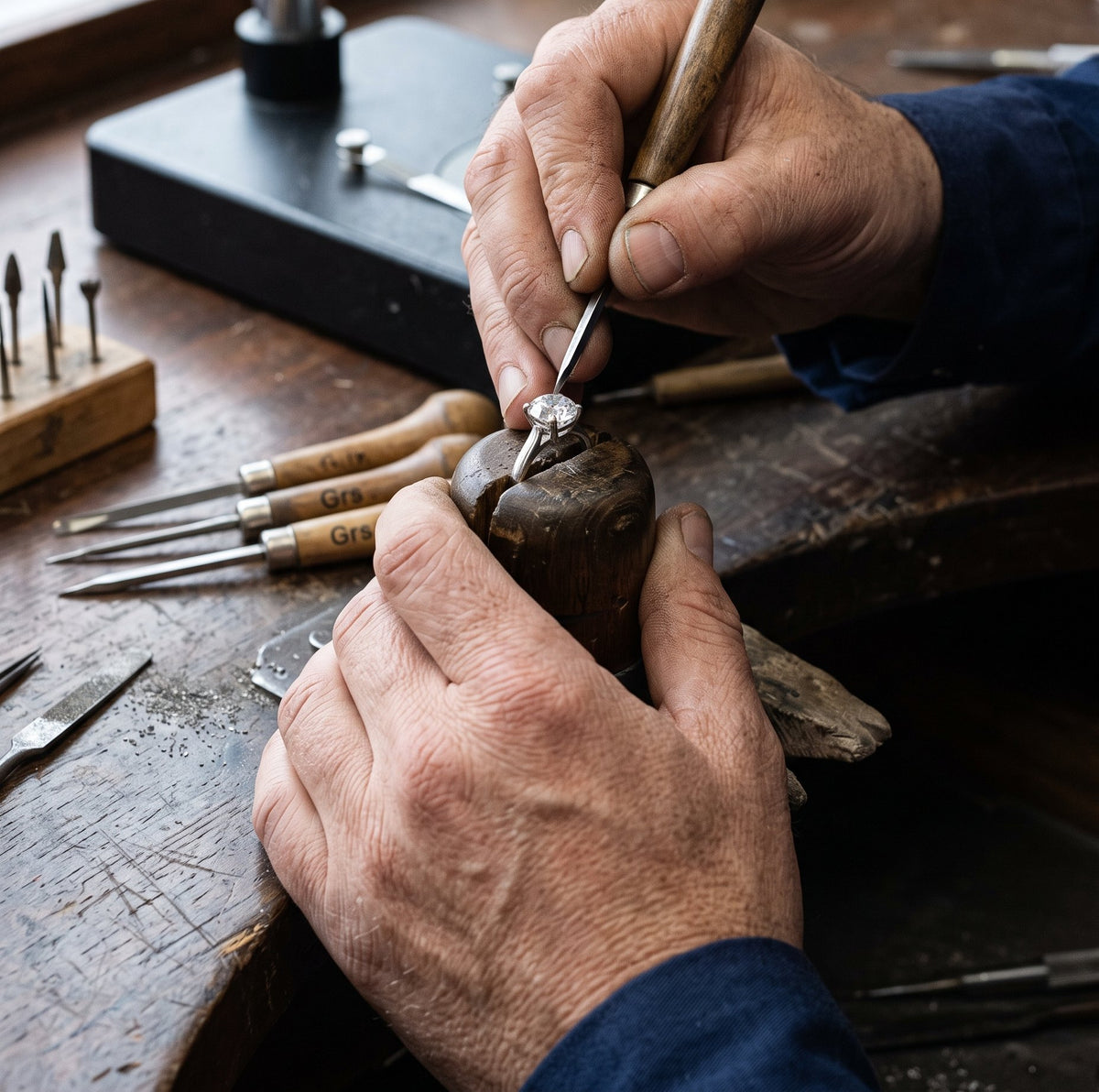
Stone setter setting a diamond under the microscope | BEUSÉA

Set by hand

Under the microscope

Our setters shape every claw by hand under the microscope and check it again after polishing. It is slow, precise work, and it is what keeps your diamond safe for a lifetime.

Frequently asked questions

Is 4 or 6 prongs better?

Four prongs show more of the diamond; six prongs add security and a rounder look. Both are excellent choices when made well.

What is the most secure setting?

The bezel setting, because a continuous rim of metal protects the whole edge of the diamond.

Do prongs need maintenance?

Claws can wear slowly over years of daily use. A yearly check lets a jeweller retighten or rebuild them in time.

Can pavé rings be resized?

Usually by about one size. Larger changes can loosen the small stones, and full eternity bands cannot be resized.